
Last updated November 21, 2026
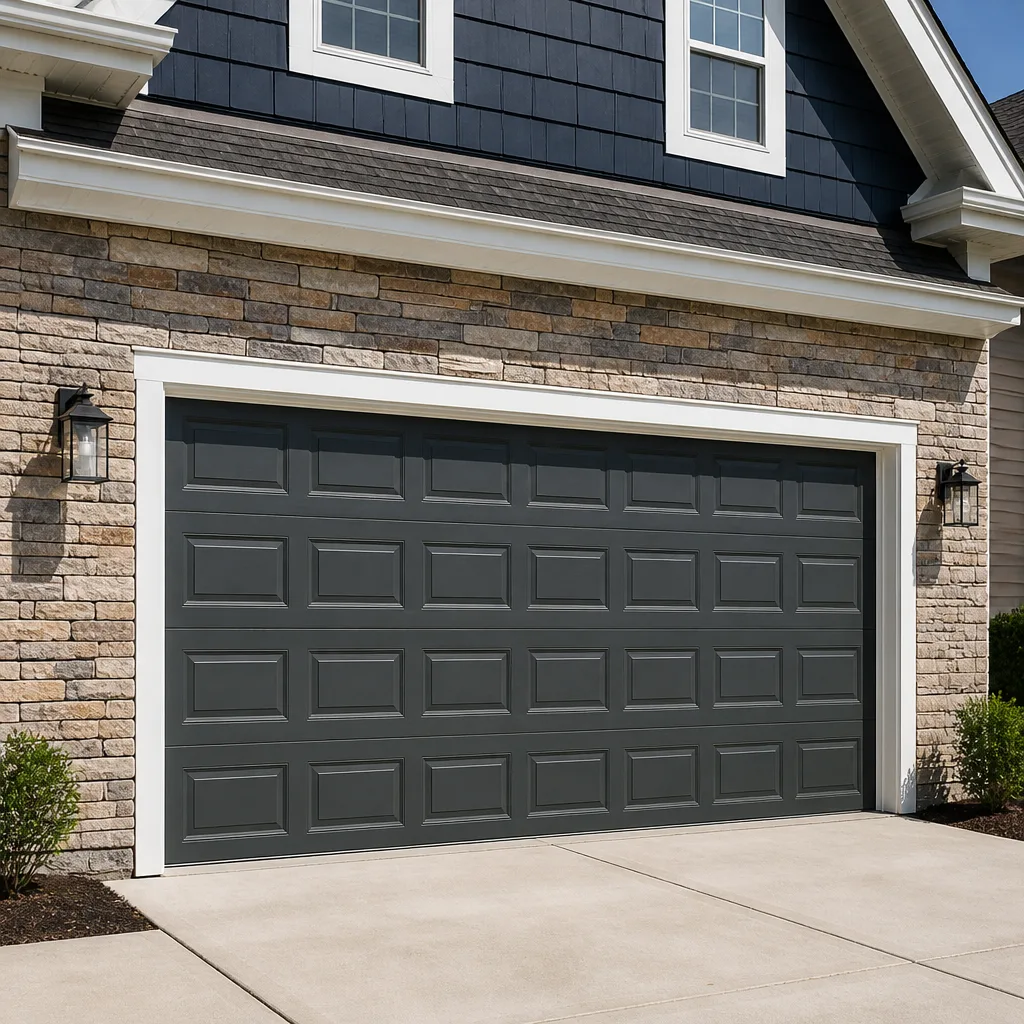 Raised-panel steel
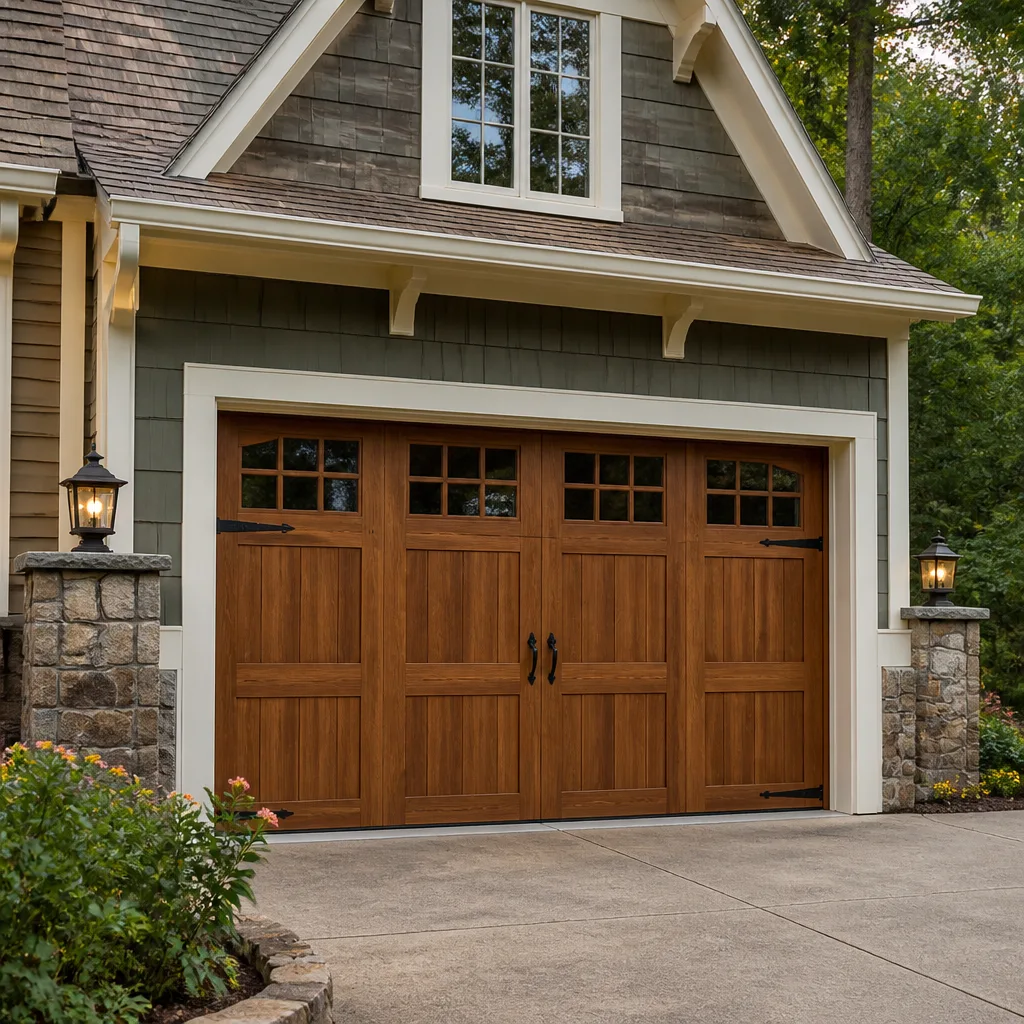 Carriage house
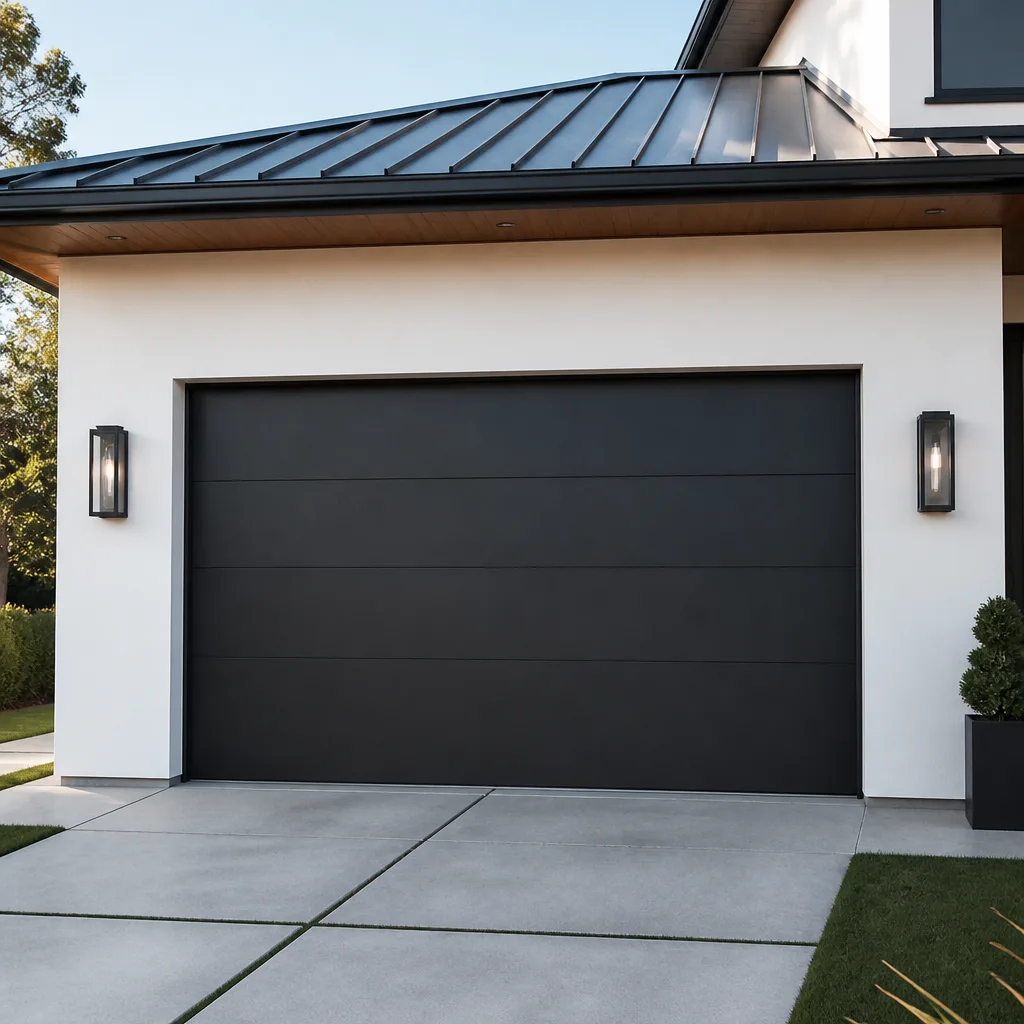 Modern flush
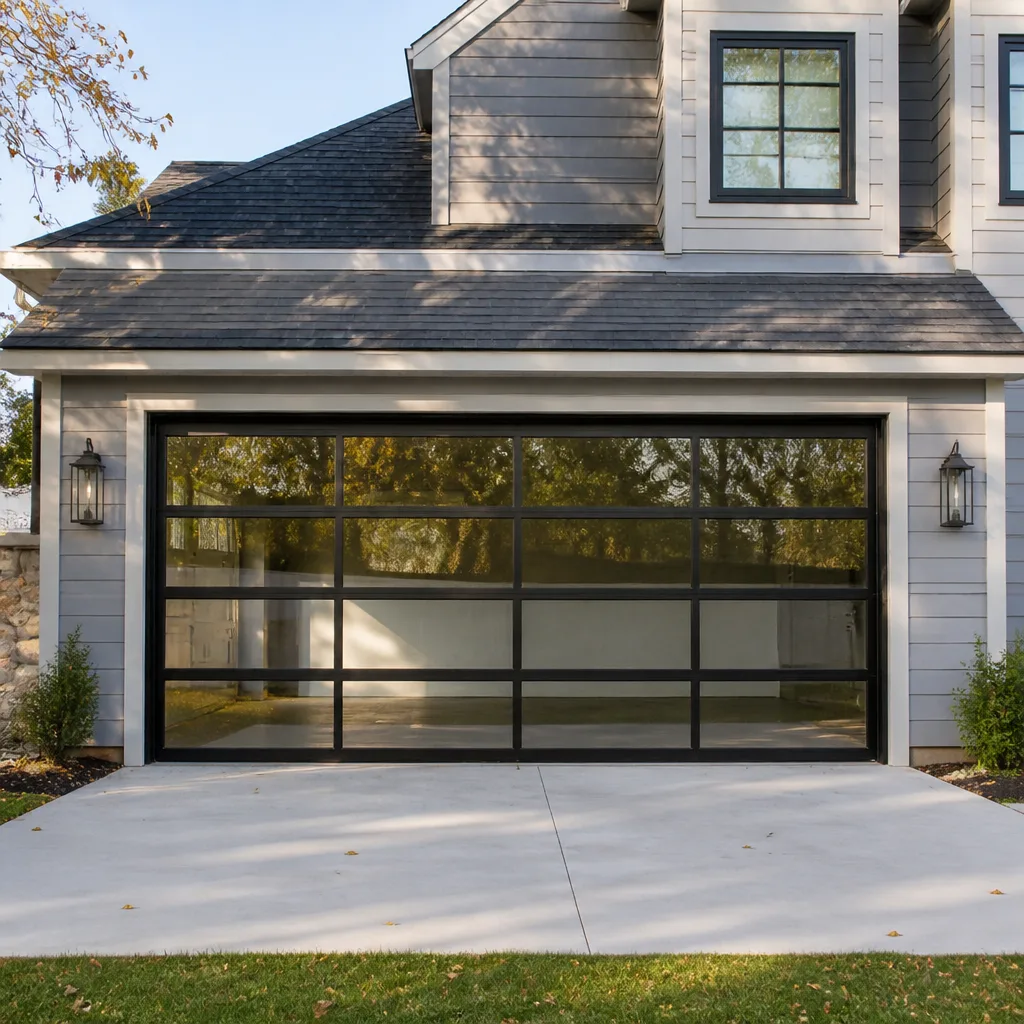 Full-view glass
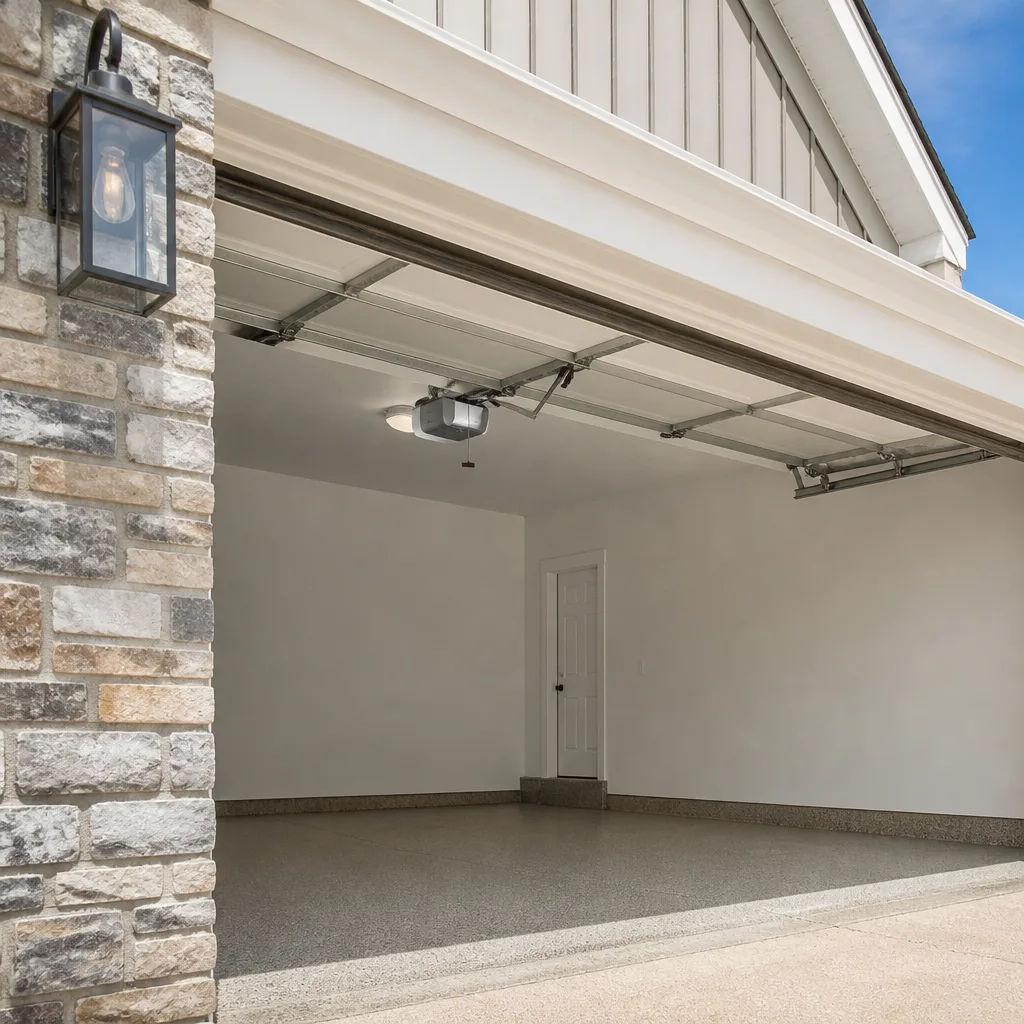 LiftMaster openers
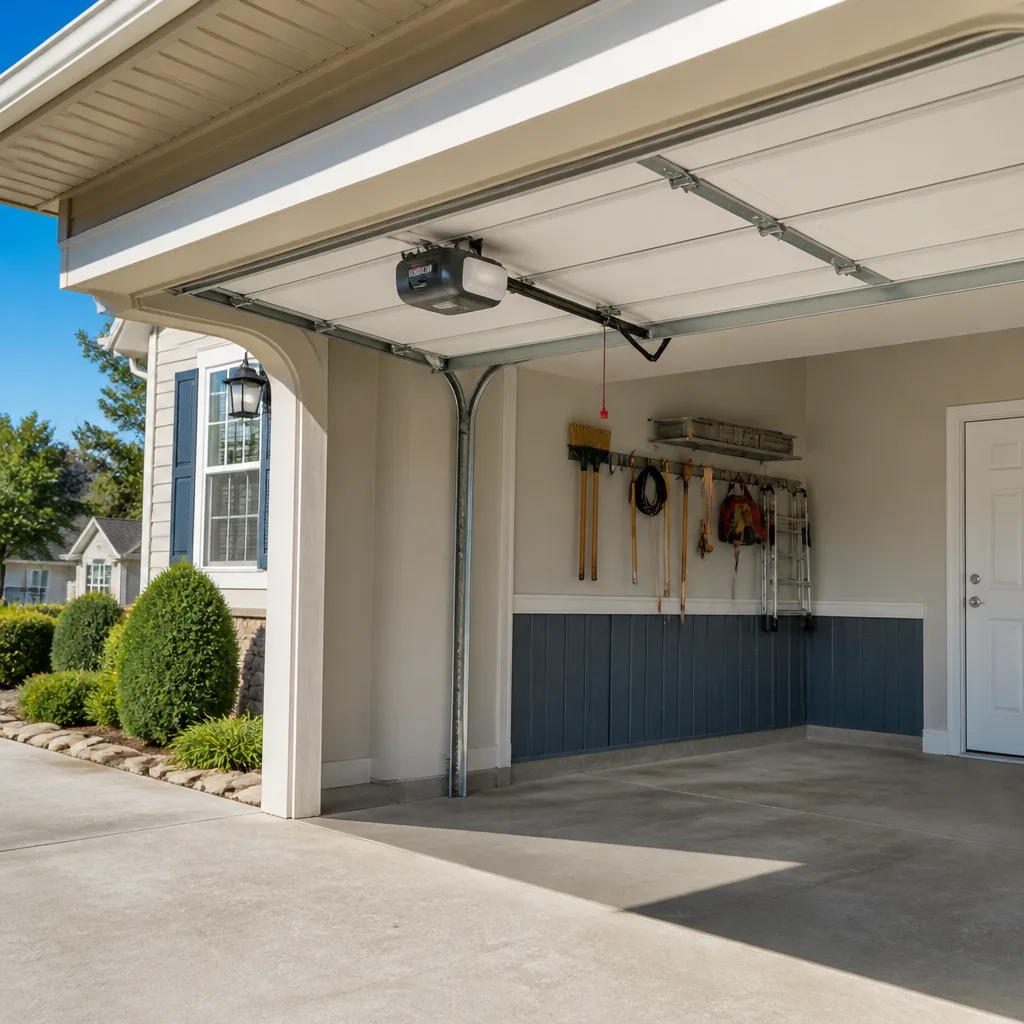 Chamberlain openers
Full 25-point door and opener safety check with every visit - springs, cables, rollers, tracks, and your LiftMaster or Chamberlain opener included
You get a price before we start. It does not change when the pro arrives.
Get your free estimateGarage Door Warning Signs: A West Ridge Homeowner’s Reference Guide
A door that takes two seconds longer to open than it used to isn’t just getting old. It’s telling you the springs are losing tension, the opener is working harder to compensate, and both are closer to failure than they were last month. Most garage door breakdowns don’t happen out of nowhere. They send signals for weeks that homeowners misread as normal door quirks. This guide decodes those signals by what they actually mean mechanically, so you know whether to adjust something yourself or call before a full failure. We’ve written it specifically for West Ridge homeowners, where older housing stock, tight alleys, and long winters give doors a particular kind of wear.
Quick Answer
The main garage door warning signs are: grinding or popping sounds during operation, a door that hangs unevenly or won’t close flush, an opener that hesitates or reverses on its own, and a door that doesn’t stay fully open. Any popping or a door that won’t stay open usually means a spring problem, and you should stop using the door until a specialist looks at it. Squeaking, rattling, and slow opener strain are usually watch-and-wait items you can address with lubrication or a tune-up.
Styles & brands we work with
- Raised-panel steel
- Carriage house
- Modern flush
- Full-view glass
- LiftMaster openers
- Chamberlain openers
Table of Contents
- Sound-Based Diagnosis: Grinding, Squeaking, Popping, and Rattling
- Visual Asymmetry: Spotting an Uneven Door Before It Derails
- Opener Behavior as a Diagnostic Tool
- The “Slow Creep” Problem: When the Door Won’t Stay Open
- Watch-and-Wait Signs vs. Stop-Using-It-Today Signs
- How West Ridge Weather Accelerates Wear
- Why Genuine Parts and Multi-Brand Coverage Matter
- Common Mistakes to Avoid
- Frequently Asked Questions
Sound-Based Diagnosis: Grinding, Squeaking, Popping, and Rattling
The sounds your door makes are the fastest, most reliable clues to what’s failing. Homeowners in West Ridge tend to describe everything as a “noise,” but four very different sounds point to four very different mechanical problems. Learning to tell them apart is the single most useful diagnostic skill you can develop, and it helps you describe the problem clearly when you call.
Here’s how to decode them:
- Grinding: A rough, continuous scrape usually points to worn or dry rollers, a misaligned track, or debris in the track channel. Grinding accelerates damage to the door panels if ignored. It’s typically a watch-and-address-soon item, not an emergency, unless it’s paired with the door stalling.
- Squeaking: A high-pitched squeal usually means the hinges, rollers, or springs have lost lubrication. This is the most forgiving warning sign. A proper lubrication of the moving parts often quiets it, and it’s a good signal to schedule routine service.
- Popping: A single sharp pop or a series of pops during operation is the most serious sound on this list. It’s often the sound of a spring under stress or a cable about to fail. Popping is a stop-using-the-door-today signal. Torsion springs and the cables they control are under extreme tension, and a failure can be violent. Don’t try to diagnose or adjust a spring yourself. Call a trained specialist.
- Rattling: A loose rattle usually comes from loose hardware: hinge bolts, roller brackets, or the door’s connecting arms. It’s rarely dangerous on its own but can loosen further and lead to a misaligned door over time.
If you hear popping or a door that’s suddenly struggling, that’s when to call for garage door repair. For routine squeaks and rattles, a service visit can tighten and lubricate everything in one trip.
Visual Asymmetry: Spotting an Uneven Door Before It Derails
A garage door that hangs slightly crooked is already telling you something is off balance, and it’s usually a sign the door is a few steps away from coming off its track. In our experience across West Ridge’s older homes, uneven doors are often the earliest and most ignored warning sign. Here’s what to look for.
Stand back and look at the door from outside, then again from inside with the door closed. Check these points:
- Gap at the bottom: One corner sits higher than the other, leaving a visible wedge of light under the door. This points to a tired spring, a stretched cable, or a bent bottom bracket.
- Uneven panel lines: The horizontal lines between panels look slanted rather than level. This can mean one side of the track has shifted, or a roller has come out of its bracket.
- Track spacing: The gap between the roller and the track edge looks different on the left than the right. A wide gap means a roller or track has worn.
- Door rubbing the frame: If the door scrapes one side of the opening as it travels, the track has likely been knocked out of alignment.
An uneven door is a watch-and-address-quickly signal. It can usually be corrected by adjusting springs, cables, or track alignment, but if you keep running it day after day, the stress accumulates until a roller jumps the track and the door jams. In tight West Ridge alleys, a jammed door can block a driveway entirely, so getting ahead of asymmetry matters. If the door is visibly crooked and won’t close square, stop using it and call for an expert look.
Opener Behavior as a Diagnostic Tool
Your opener is a surprisingly honest reporter of the door’s health. When it starts behaving differently, it’s often reacting to a problem in the door itself, not failing on its own. Here’s how to read the three most common opener behaviors.
- Hesitation: The opener pauses or stutters before lifting. This usually means the door is heavier to lift than it used to be, often due to a spring that’s lost tension. The opener is being asked to do work the spring should be doing. Continued hesitation wears out the opener motor and gear assembly prematurely.
- Reversal: The door starts down, then reverses back up on its own. This can be a safety sensor issue (something in the sensor beam), a travel limit setting that’s drifted, or a sign the opener’s force sensitivity is tripping because the door is binding. Reversal is a nuisance you can often resolve with a sensor alignment check, but persistence usually means the door needs adjustment.
- Motor running longer than usual: The motor keeps whirring after the door has reached the top or bottom. This can indicate a stripped gear in the opener drive or a limit switch that’s out of position. If it’s the latter, the door may fail to stop reliably.
If your opener is a LiftMaster, Chamberlain, or Genie and it’s displaying these behaviors, it’s worth having a specialist look at both the opener and the door. We service all major opener brands, including these, so you get one visit rather than two. For dedicated help, see garage door opener repair. If the opener is behaving oddly but the door seems fine, it could be a straightforward fix in the control board or drive. If the door is also hesitating, the opener may be compensating for a door problem.
The “Slow Creep” Problem: When the Door Won’t Stay Open
A door that doesn’t stay fully open, or slowly creeps back down when it should be parked at the top, is a spring tension issue, not an opener problem. This is one of the most misdiagnosed warning signs we encounter in West Ridge. Homeowners often assume the opener is failing and call for opener repair, but the real culprit is almost always the torsion spring or the extension springs that counterbalance the door’s weight.
Here’s why this matters for the fix. Garage door springs are what make a heavy door feel light. They hold the door’s weight in offset tension. When the spring loses tension over time (which happens on every door, but is accelerated by temperature swings), the door loses its counterbalance and becomes hard for the opener to lift and hold. The opener is designed to move a balanced door, not to lift a heavy one. If you keep asking the opener to do the spring’s job, you’ll wear out the opener along with the door.
A door that won’t stay open is a caution signal. It’s often followed by the door coming down unexpectedly, and that’s a safety concern, especially if a car or a child is underneath it. We treat spring repair as a core, dedicated service because springs are dangerous. They’re under high tension and can cause serious injury if you try to adjust or remove them yourself. If a torsion spring has actually broken, you’ll usually notice a door that’s suddenly very heavy to lift and may not reach the top at all. Both cases point to the same fix. Call a specialist and leave the door closed until then.
The good news is that spring replacement, done correctly, restores the door’s balance and feels like a new door. To learn more about what that job involves, see door spring and balance work.
Watch-and-Wait Signs vs. Stop-Using-It-Today Signs
Not every warning sign is urgent, and knowing which is which saves you money and stress. Here’s a clear split to sort out when you should call now versus when you can schedule a service visit.
Watch-and-wait signs (schedule a service visit soon):
- Faint squeaking or squealing from the moving parts (usually a lubrication need).
- A mild rattle from loose hardware.
- A door that’s slightly slower than it used to be but still fully functional and level.
- Occasional opener hesitation on cold mornings.
Stop-using-the-door-today signs (call now):
- Any popping sound from the springs or cables.
- A door that won’t stay open or creeps back down.
- A visibly crooked door or a door that scrapes the frame.
- The door has come off its track or hangs by one side.
- A spring you can see has broken (a visible gap in the coil, or the door is suddenly heavy).
- The opener reverses repeatedly or the door falls when the opener releases.
If a door shows a stop-using sign, leave it closed and call us at (833) 736-5797. We answer 24/7, and we’ll book a fast dispatch to inspect it. Running a door with a failing spring or a bent track risks a dangerous failure, and the repair cost goes up once there’s additional damage.
How West Ridge Weather Accelerates Wear
West Ridge’s seasons put a particular kind of stress on garage doors. Cold winters and warm, humid summers mean doors expand and contract over the year, and that cycle is the enemy of springs, cables, and hardware. In our experience, most spring failures here happen with the first deep freezes of winter, when the metal is most brittle and the tension is highest.
Here’s what the seasons do to your door:
- Winter: Cold shrinks the metal, tightens tolerances, and makes springs and cables more brittle. Squeaks often start or worsen in winter, and a marginal spring is most likely to fail. Lubrication helps, but failing springs won’t be fixed by grease.
- Spring thaw: The freeze-thaw cycle shifts ground and can move the concrete around the door frame, tweaking track alignment. This is when crooked doors often appear.
- Summer humidity: Moisture can rust door hardware, stiffen rollers, and cause the door to bind. If your door starts grinding in humid weather, check for rust on the rollers and hinges.
- Year-round: Temperature swings cause the steel panels to expand and contract, which can create rattles and loosen hardware over time.
In West Ridge, where many doors face the alley and get less clearance, alignment problems show up faster than they would on wide, open suburban driveways. A door that starts to drag in the winter is often just slightly out of adjustment, and a service visit in the fall can head off a mid-winter failure. If your home has an older door, a fall tune-up is one of the best habits you can build.
Why Genuine Parts and Multi-Brand Coverage Matter
The right diagnosis is only half a repair. The other half is the part. Garage door systems, especially openers, are built with brand-specific parts, and substituted or off-brand components are a leading cause of repeat failures. We stock and supply genuine parts, so repairs aren’t delayed waiting on third-party shipping or matched with the wrong component.
We’re authorized to service eight major brands: LiftMaster, Chamberlain, Genie, Clopay, Amarr, Wayne Dalton, Craftsman, and Raynor. That coverage matters for two reasons. First, you don’t have to figure out which specialist handles your door or opener; you call one number and we work on the brand you already own. Second, we can source the correct part for that brand rather than improvising. Whether it’s a Raynor panel bracket, a Clopay bottom seal, or a Genie opener drive gear, we’re set up for it.
When you’re weighing repair versus replacement, parts availability often tips the decision. A well-built door with a failing spring or opener deserves a quality part, not a cheap substitute. If the door is near the end of its life, a replacement might make more sense, and we handle that too. We cover the full lifecycle: installation of new doors and repair of existing ones. If you’re thinking about a new door, see garage door installation, where we handle the measure, the door selection, and the install with the same brand coverage.
How We Approach a Repair Call
What happens when you call us about a warning sign? Here’s the general shape of a service visit, so you know what to expect. A skilled technician listens to what you’re hearing, tests the door’s balance and travel, checks the springs and cables, looks at the tracks and rollers, and tests the opener. The diagnosis comes first, and the price is quoted and agreed before any work starts.
- Listen and inspect: We ask what sounds or behaviors you’ve noticed, then test the door by hand to check its balance and weight.
- Check the high-risk components: Springs and cables get a careful visual and operational check, because those are the parts that fail dangerously.
- Review the opener: We check the motor, drive, sensors, and limit settings, especially on the brand you own.
- Quote and agree: We explain what we found and give you a written estimate. No work begins until you’ve agreed to the price.
- Complete the repair: With genuine parts on hand for the major brands, most repairs are done in a single visit.
We answer 24/7 and offer fast dispatch from 7am to 7pm, Sunday through Friday. If you call outside dispatch hours, we’ll book you into the next opening. Our technicians have up to 15 years of experience, and we specialize exclusively in garage doors rather than general handyman work. That focus is why we can handle a spring, a panel, hardware, an opener, and a full replacement under one roof.
See the difference
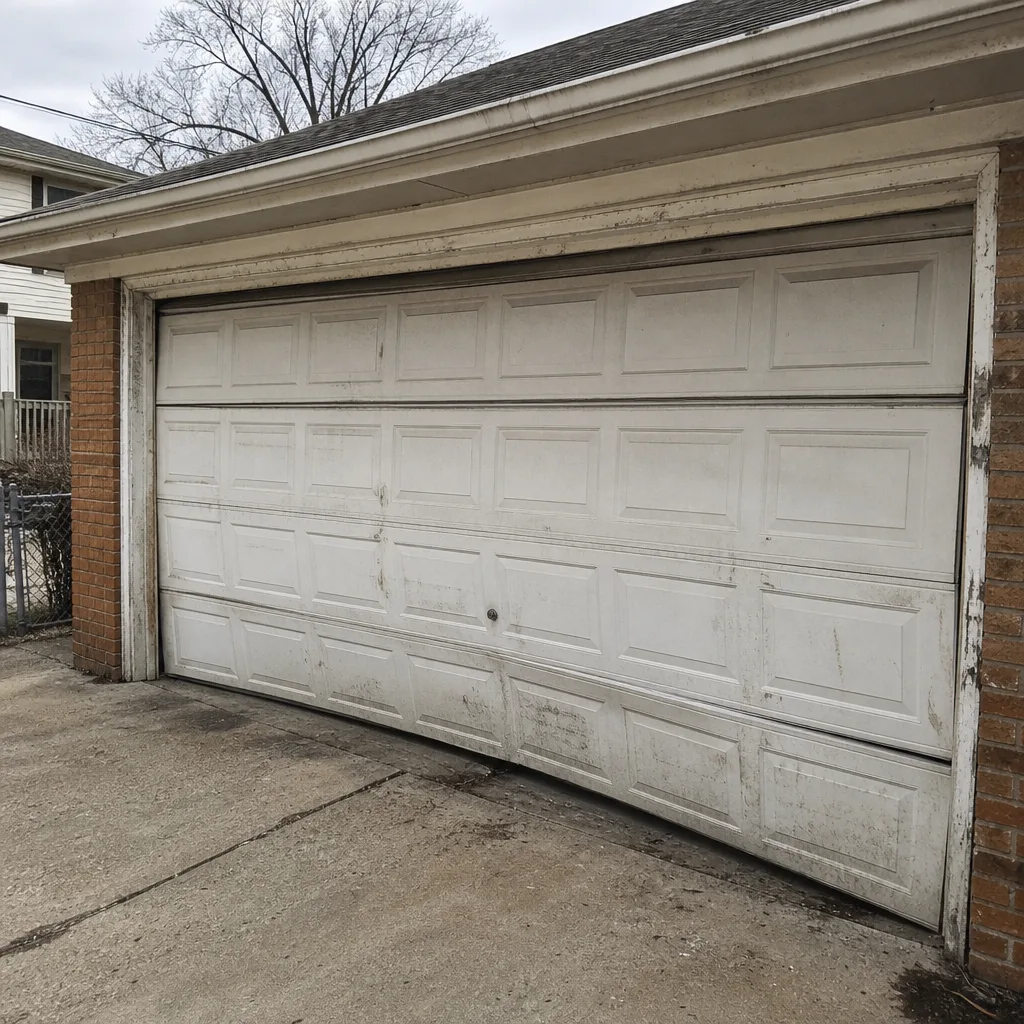 Before
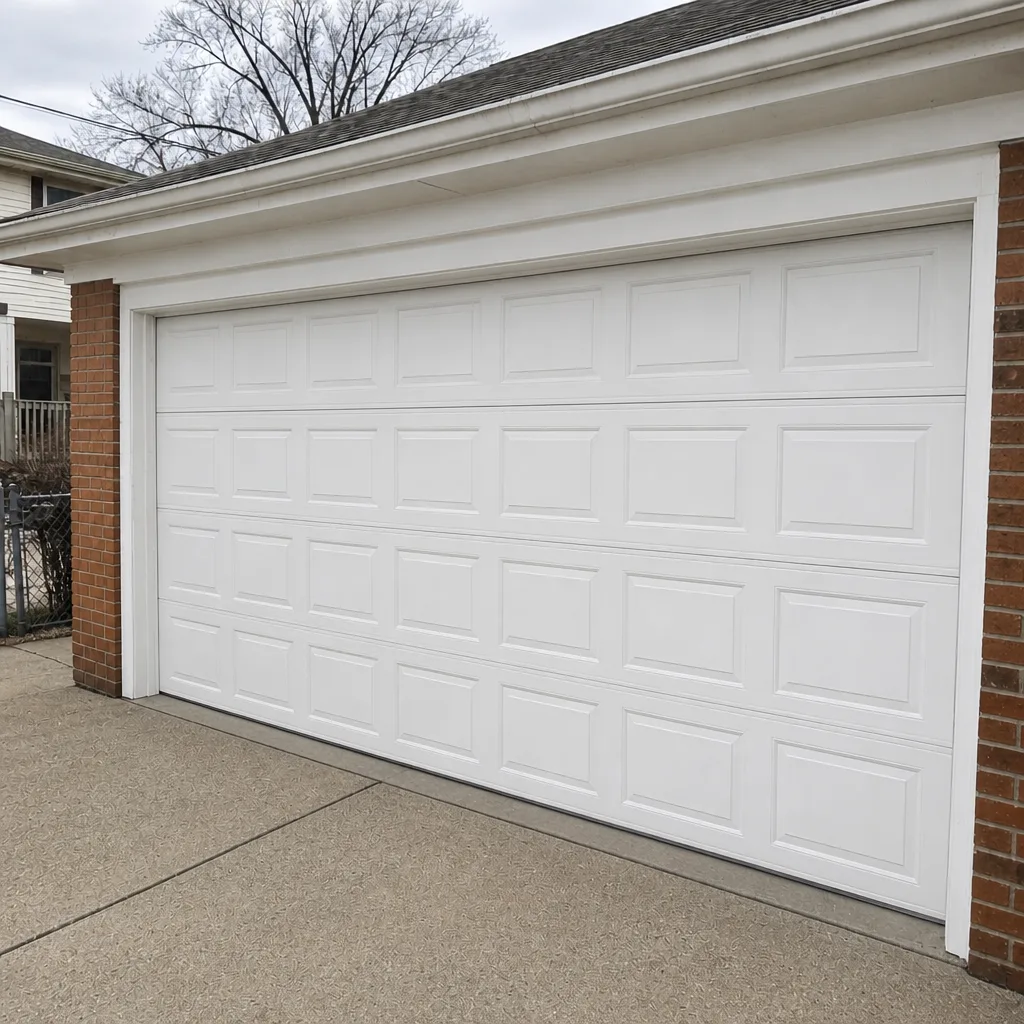 After
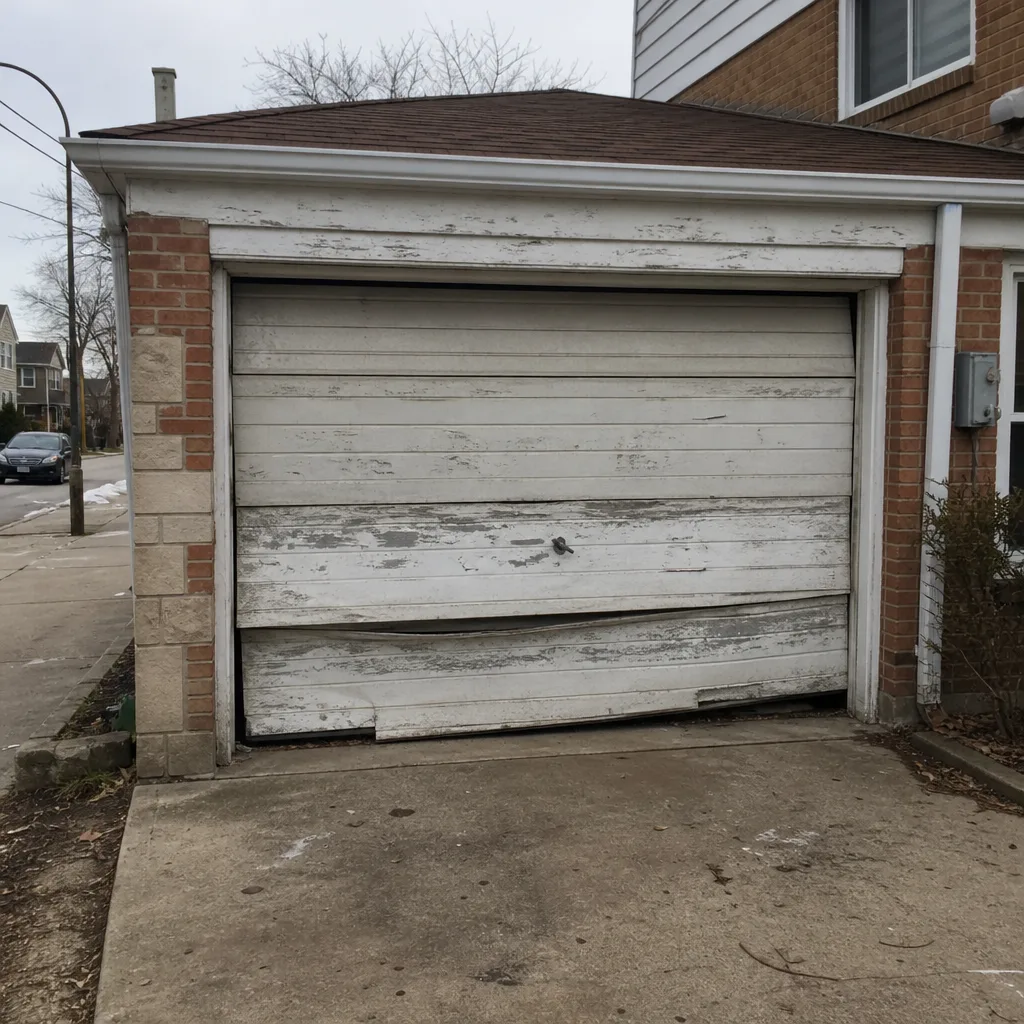 Before
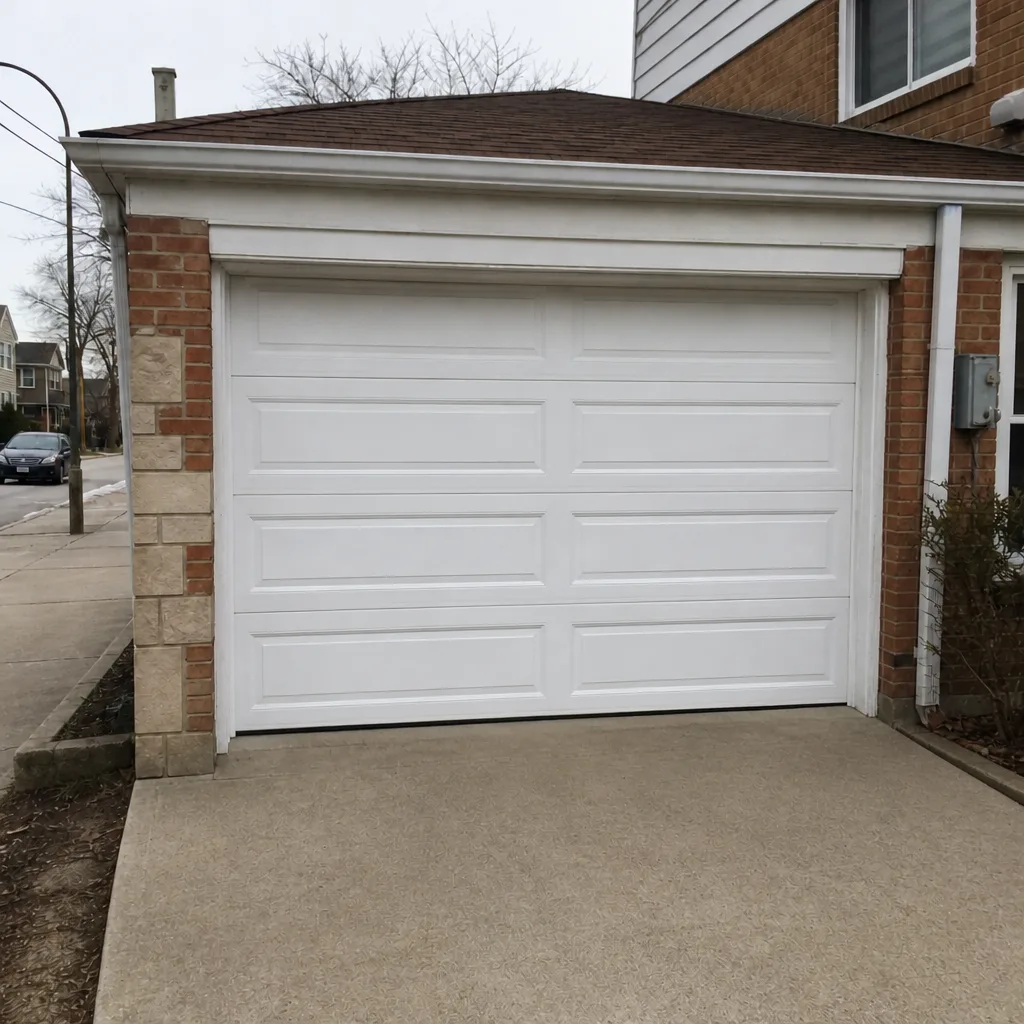 After
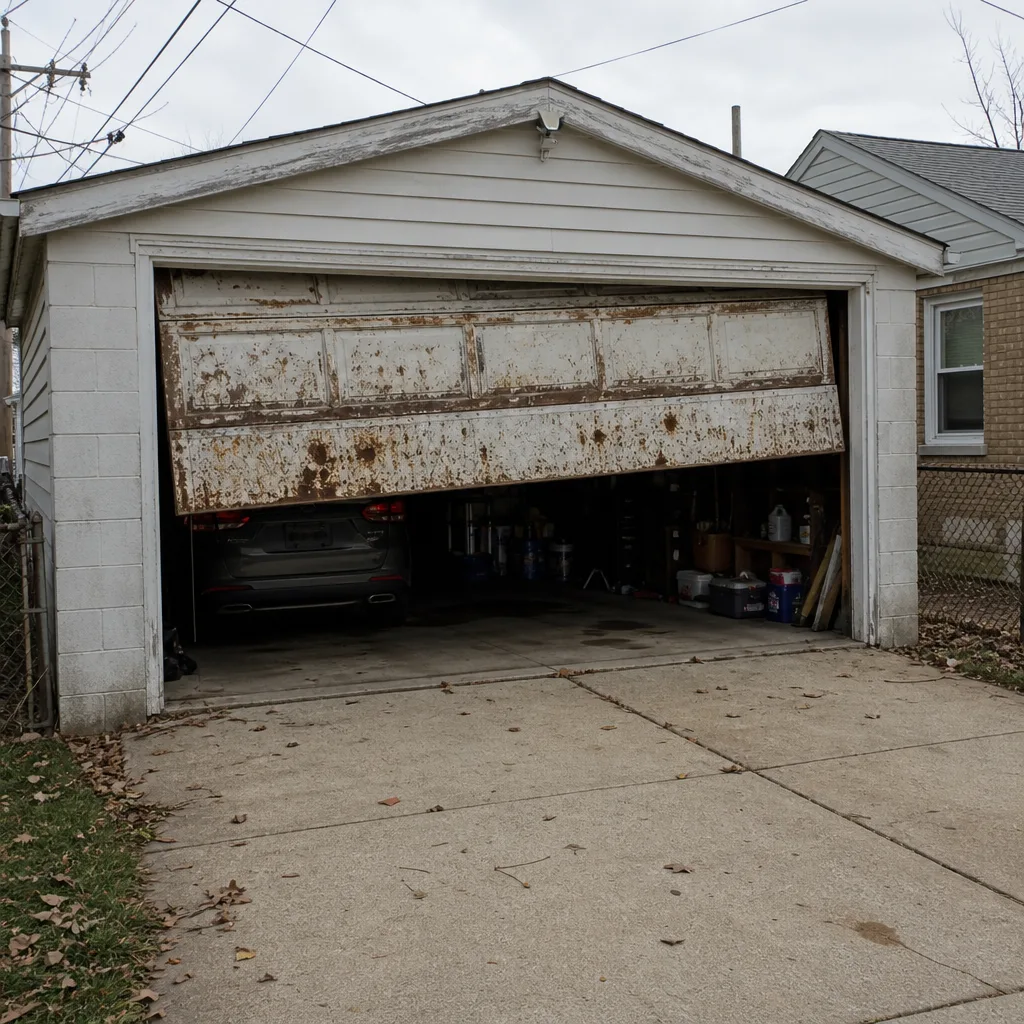 Before
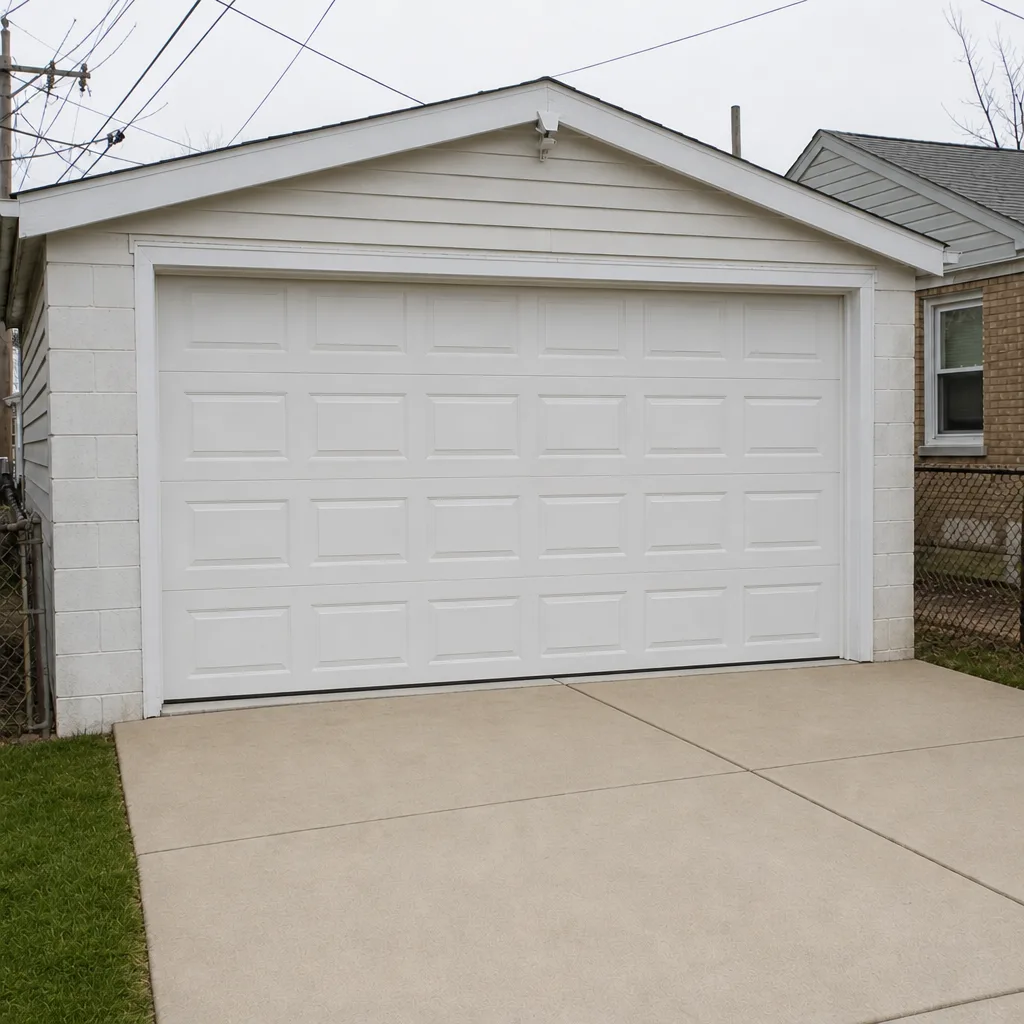 After
Common Mistakes to Avoid
Most of the avoidable damage we see in West Ridge comes from a handful of repeated missteps. Here are the ones worth knowing before you touch your door.
- Ignoring a popping sound: Popping is often the last warning before a spring or cable fails. Waiting it out risks a dangerous break and more expensive damage.
- Adjusting springs yourself: Torsion and extension springs are under extreme tension and can cause serious injury. They’re one of the few home repair jobs that genuinely shouldn’t be a DIY project. Leave them to a trained technician.
- Oiling the springs instead of fixing the tension: Lubrication helps squeaks, but it won’t restore a spring that’s lost its pull. If the door won’t stay open, grease won’t solve it.
- Running an uneven door: A door that hangs crooked is on its way to jumping the track. Adjusting the problem early prevents a jam that blocks your alley and driveway.
- Assuming the opener is always the problem: Hesitation and reversal are often the door’s weight or sensors, not a failed opener. Diagnose the door first, or you’ll replace working parts.
- Using generic replacement parts: Off-brand springs and rollers can fail sooner and fit poorly. Genuine parts for your door’s brand are worth the difference.
- Skipping a seasonal check: A fall tune-up before the West Ridge winter catches small problems before the cold makes them worse, when springs are most likely to break.
When to Call a Professional
Some warning signs are safe to watch. Others mean you should stop using your door and call. Call us today if you hear popping, if the door won’t stay open or creeps down, if it’s visibly crooked or off its track, if a spring looks broken, or if the opener reverses or fails to hold the door. Those are the situations where continuing to run the door risks a dangerous failure and a bigger repair bill. A free estimate means you know the price before any work starts, and the local pro is licensed and insured as their state requires. Garage Door Repair West Ridge offers free estimates in West Ridge. Call (833) 736-5797 and we’ll take a look.
Frequently Asked Questions
The most common signs are a door that hesitates or runs slower, squeaking or grinding from the moving parts, a door that hangs unevenly, an opener that reverses on its own, and a door that won’t stay fully open. Popping sounds and a door that creeps back down are the most serious. Call (833) 736-5797 for an exact quote on any of these. Estimates are free.
A popping sound usually points to a spring under stress or a cable about to fail, and it’s a stop-using-the-door-today signal. Springs and cables carry extreme tension, so a break can be violent. Don’t try to adjust it yourself. Call a trained specialist: (833) 736-5797.
No, it’s almost always a spring tension problem, not an opener problem. The springs counterbalance the door’s weight, and when they lose tension the door can’t hold its open position. The opener exists to move a balanced door, not lift a heavy one. Repairing the springs restores the balance. For an exact quote on a fix, call (833) 736-5797.
Yes, squeaking is the safest sign to handle yourself. It usually means the hinges, rollers, or moving parts need lubrication. A quick application of an appropriate lubricant often quiets it. If the squeak returns quickly or is paired with grinding or popping, call us to check the door’s alignment, rollers, and springs.
Once a year is a reasonable rhythm, ideally in the fall before winter cold makes springs brittle and more likely to fail. A service visit checks the springs, cables, rollers, tracks, and opener and catches small problems before they turn into a broken door. Schedule a hello and tune-up ahead of the season. Call (833) 736-5797 for details.
Do a quick safe visual and listening check: listen for popping or grinding, look at the door from outside for a crooked hang, and watch the opener for hesitation or reversal. Don’t touch the springs, cables, or tracks by hand. Note what you see and tell us when you call. We answer 24/7. Fast dispatch from 7am to 7pm, Sunday through Friday.
The Bottom Line
Almost every garage door failure leaves a trail of warning signs for weeks. The trick is reading them by what they mean mechanically: popping points to springs and cables (stop using the door), asymmetry points to track or spring issues (address promptly), squeaking and rattling are lubrication-and-tightening work (watch and schedule), and opener hesitation is often the door telling the opener it’s struggling. The “slow creep” of a door that won’t stay open is a spring tension problem, not an opener problem. If you’re unsure, call us at (833) 736-5797 for a free estimate. We work on the brand you already own, and we’ll quote the price before any work starts.
One call handles it whether the problem is a spring, an opener, a panel, or the whole door.
Written by the team at Garage Door Repair West Ridge.