
Last updated November 21, 2026
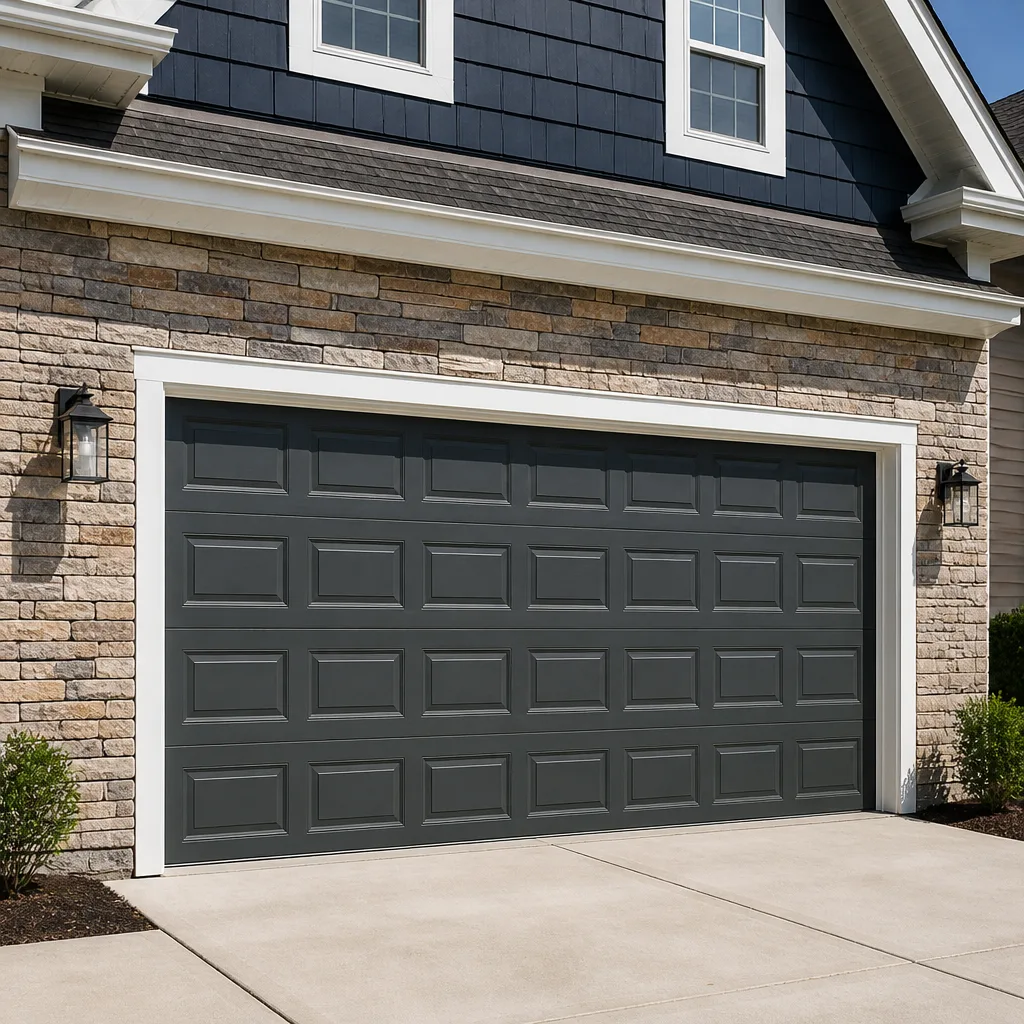 Raised-panel steel
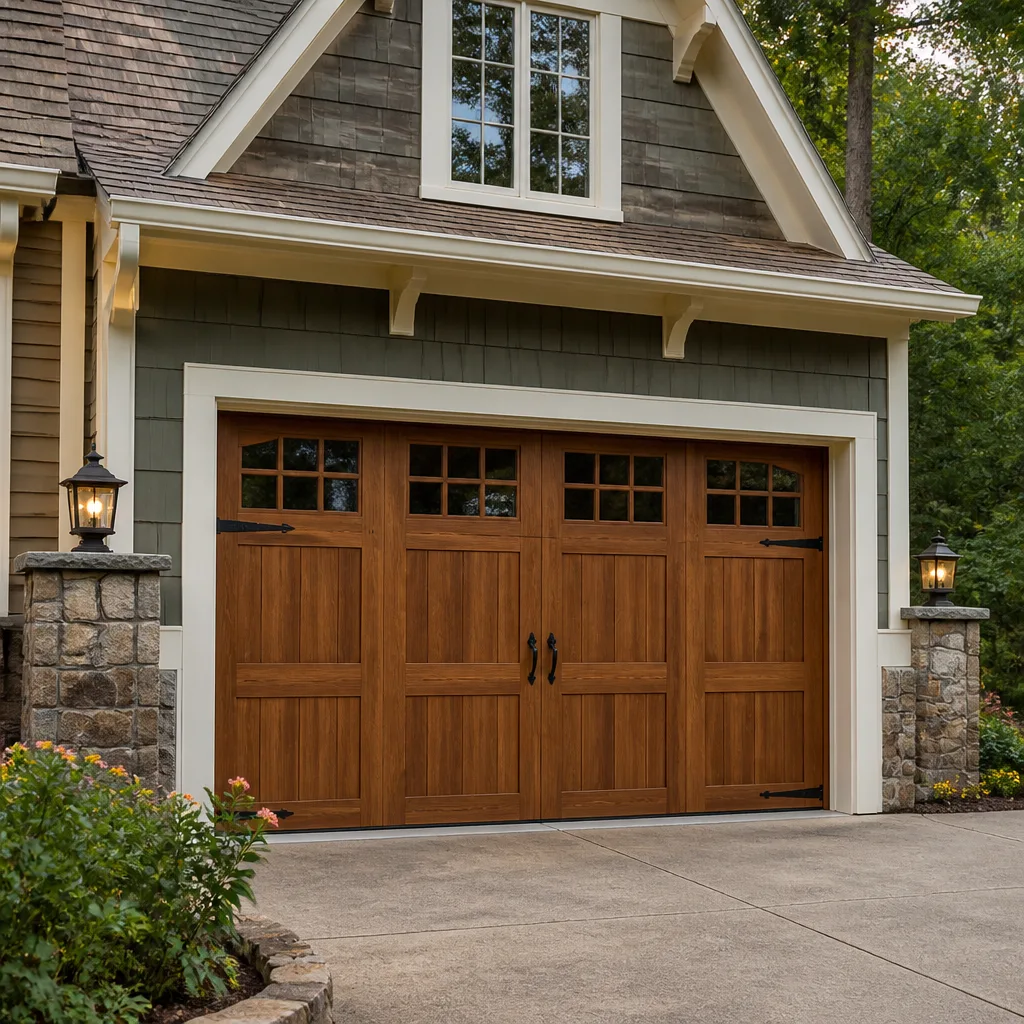 Carriage house
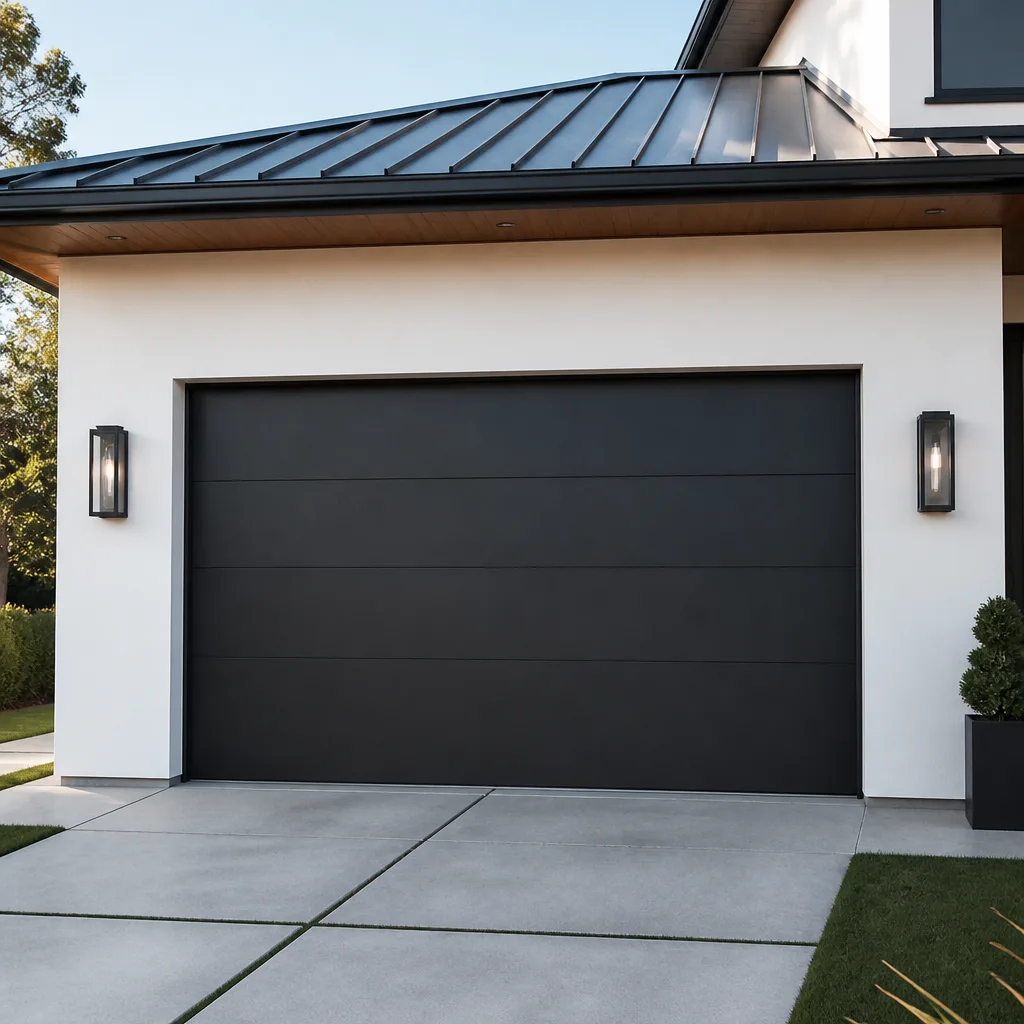 Modern flush
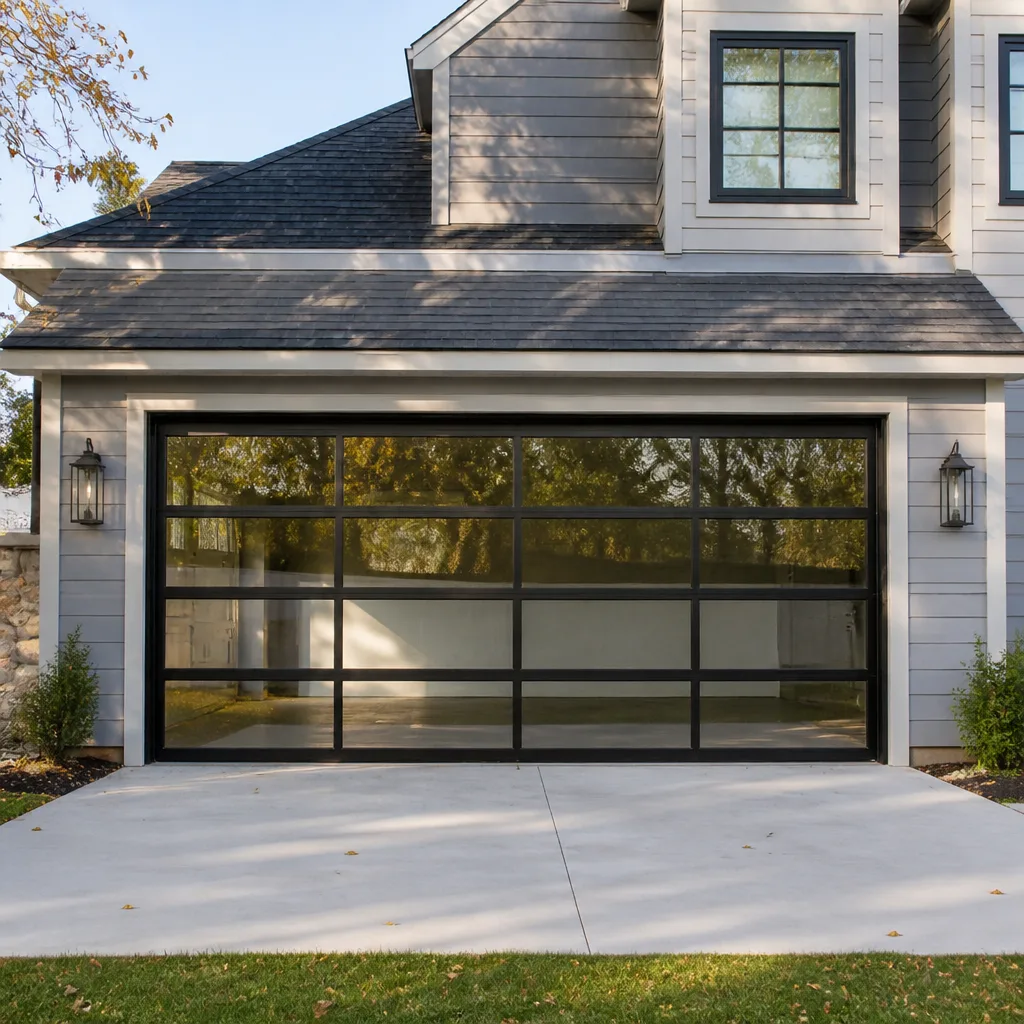 Full-view glass
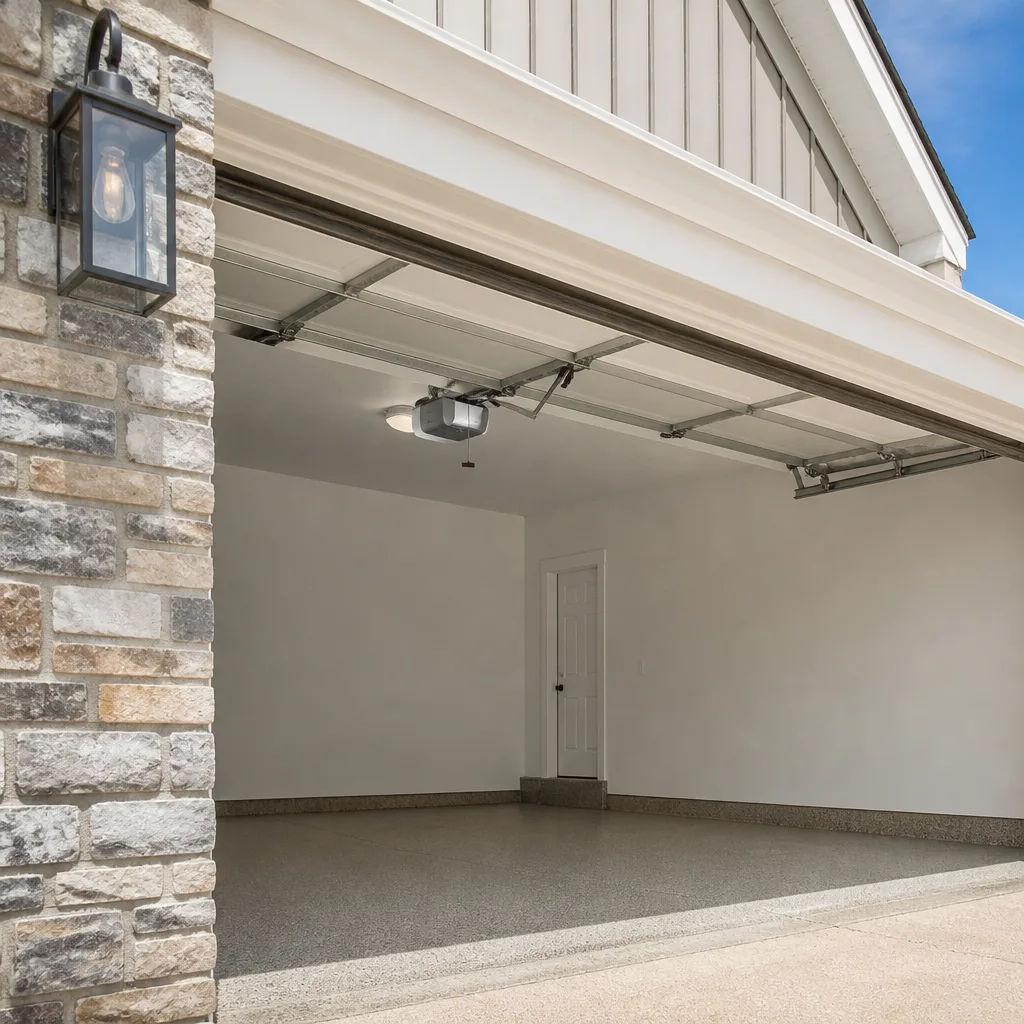 LiftMaster openers
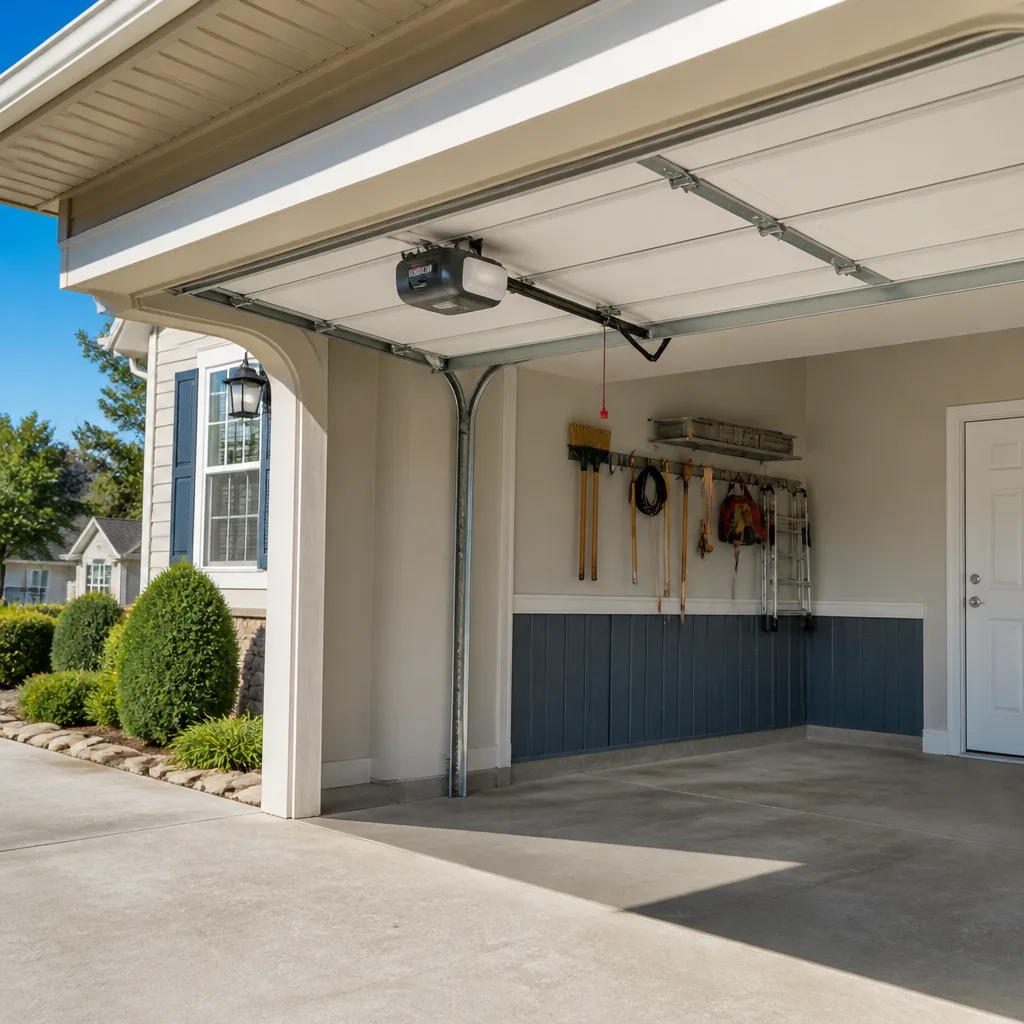 Chamberlain openers
Full 25-point door and opener safety check with every visit - springs, cables, rollers, tracks, and your LiftMaster or Chamberlain opener included
You get a price before we start. It does not change when the pro arrives.
Get your free estimateDIY vs Professional Garage Door: The West Ridge Homeowner’s Decision Guide
Most garage door repairs look simple from the driveway. A panel is crooked, a spring is broken, a sensor blinks. Surely that’s a Saturday project, right? Here’s the counterintuitive part: the question isn’t whether you’re handy enough. It’s whether the task involves stored mechanical energy that can hurt you the moment something slips. Torsion springs hold enough force to break a wrist or crack a windshield when they let go, and no amount of YouTube confidence changes that physics. This guide draws a clean line between what’s genuinely safe to handle yourself in West Ridge and what isn’t, task by task, with the tool signals and cost realities that tell you when to stop. You’ll finish knowing exactly which jobs are yours and which ones warrant a call.
Quick Answer
In West Ridge, safe DIY garage door tasks are limited to weatherstripping, sensor alignment, lubrication, and minor hardware tightening. Panel replacement, track realignment, opener diagnostics, and cable or spring work are professional jobs – spring and cable repair in particular because stored tension makes them genuinely dangerous, not just fiddly. If your door is more than a cosmetic adjustment away from working, a specialist is the safer and usually cheaper route once you count rework.
Styles & brands we work with
- Raised-panel steel
- Carriage house
- Modern flush
- Full-view glass
- LiftMaster openers
- Chamberlain openers
Table of Contents
- The Three Tiers: Safe DIY, DIY With Caution, Never DIY
- Why Torsion Springs Are Categorically Different From Other Repairs
- The Cost Reality of DIY Attempts That End in a Service Call
- Tools That Keep a Job DIY – and Tools That Signal It Isn’t
- How West Ridge’s Older Garages Change the DIY Equation
- Can You Diagnose an Opener Yourself?
- Brand Matching: Why Generic Parts Cause Repeat Repairs
- A Step-by-Step Framework for the Decision
The Three Tiers: Safe DIY, DIY With Caution, Never DIY
Sorting the work into three buckets makes the decision fast. Skill matters less than the type of energy involved and the consequence of getting it wrong.
Tier 1: Safe DIY (no stored tension, low consequence)
- Weatherstripping replacement on the bottom seal – a hand tool and a clean track are all you need.
- Sensor alignment and cleaning on the photo-eye pair near the floor. A misaligned sensor is the most common reason a door reverses mid-travel.
- Lubrication of hinges, rollers, and the torsion bar bearing plate with a garage-door-rated lubricant, never household oil or grease.
- Tightening exposed hinge and bracket bolts that have worked loose from vibration.
- Replacing a remote battery or re-pairing a remote to a LiftMaster or Chamberlain opener using the manual.
Tier 2: DIY With Caution (right tools, right procedure, decent risk)
- Replacing a single roller – safe if you clamp the door and understand how the roller seats in the track. The wrong technique bends the track.
- Adjusting opener travel limits and force settings – doable with the manual, but too much force defeats the safety reverse system.
- Replacing a damaged bottom bracket on a door with extension springs only, after relieving tension correctly.
- Straightening a slightly dented track with a rubber mallet – successful maybe half the time, and a miss costs you a service call.
Tier 3: Never DIY (regardless of skill level)
- Torsion spring replacement or adjustment – stored tension is the physical hazard.
- Cable replacement on either side – cables are under tension alongside the springs and can fail with force.
- Panel replacement on a sectional door – panels are heavier than they look and the door must be counterbalanced first.
- Track replacement – full realignment depends on plumb, level, and headroom together.
- Anything involving the opener’s internal gearing or capacitor – high-voltage components inside the housing.
Why Torsion Springs Are Categorically Different From Other Repairs
A torsion spring is a coil of steel wound tight to counterbalance the weight of a door that typically runs well north of one hundred pounds. The windings store that energy continuously. It doesn’t dissipate between uses; it holds until the spring fails or is unwound in a controlled way with the right winding bars. That’s the difference between a spring and a hinge. A hinge fails, and gravity does what gravity does. A spring fails, and it releases stored torque through whatever is in its path.
There are two failure modes that matter. First, a spring can break while the door is at rest – often with a sharp crack loud enough to hear from inside the house, and the door drops quickly since counterbalance is gone. Second, and the reason technicians train for this work, the spring can release while being handled. Without proper winding bars and a firm understanding of how many turns it should hold, an installer can lose control of the bar. The energy goes into the bar, into the surrounding frame, into hands and wrists.
That’s not a liability disclaimer. That’s a mechanical description of what makes spring work different from every other garage repair. Cable tension adds a second layer: cables run alongside the springs and carry the same kind of load. When a cable frays, the moment of failure arrives without warning. Most generalist handymen won’t touch either job. When you see a technician name garage door repair as the work they do all day, you’re seeing someone trained for those two specific tasks. That’s the technical depth worth paying for.
The Cost Reality of DIY Attempts That End in a Service Call
Most DIY garage door projects that end in a service call didn’t start with overconfidence. They started with a job that looked like an adjustment. Here is where the money usually goes when the adjustment doesn’t hold.
- Self-adjusted opener force setting. Raising the force limit to stop nuisance reversals is the classic workaround. What it does is defeat the safety reverse, which is the one feature that keeps the door from closing on a person or pet. The correction usually involves resetting force and travel, plus diagnosing whatever originally tripped it. A garage door opener repair visit at that point is cheaper than you’d think.
- DIY roller replacement on a bent track. Prying a stubborn roller out of a track is the fastest way to distort the rail. Now the door binds, the opener strains, and both the roller and the track need professional attention.
- Wrong spring. A spring that looks close enough on the outside isn’t necessarily the right wire gauge or wind count for the door’s weight. A mismatched spring accelerates wear across the whole system and can fail dramatically.
- Off-brand opener parts. A generic gear kit installed on a Genie or Raynor unit often fits poorly, wears faster, and forces a second repair within a year. That’s why parts availability matters: Garage Door Repair West Ridge stocks and supplies genuine components for the major brands rather than shuffling the job to a third-party order.
- Panel replacement with hidden damage. A replaced panel on a door that’s out of balance or has a failing hinge means the new panel goes crooked. That’s a two-part repair instead of one.
The pattern is familiar: the DIY fix feels productive, and then a part you never touched is now a problem. The written quote tells you where the correction lands before the technician starts.
Tools That Keep a Job DIY – and Tools That Signal It Isn’t
Tool inventory is a surprisingly honest gauge of scope. If everything the job needs lives in a standard homeowner toolbox, you’re probably safe. If the list requires a machine you don’t own, that’s the cue to stop.
Tools that belong in a legit DIY job
- Screwdriver set (Phillips and flathead) for brackets and covers
- Adjustable wrench for hinge and bracket bolts
- Socket set for the occasional carriage bolt
- Rubber mallet for a light track adjustment
- C-clamp or locking pliers to secure the door if you’re touching a roller
- Garage-door-rated lubricant (silicone or lithium, not WD-40)
- Step ladder for sensor and opener adjustments
Tools that mark the job as professional-only
- Winding bars. Designed specifically for torsion spring work, and if you need to buy them, that’s the signal you shouldn’t be doing the job. A homeowner using improvised substitutes is a genuine injury risk.
- Cable grip and tension tool. Cables must be secured before removal and released in a controlled way. There is no safe household substitute.
- Door weight scale. Required to match a new spring to the door’s true weight. Guessing is how you end up with a spring that fails early or leaves the door too heavy to lift.
- Track alignment gauge or laser level. Needed to verify plumb and level for a full realignment.
- Brake and balance clamp. Holds the door at a specific position while a technician works on the counterbalance system.
If a job requires one tool off the second list, hand it over. Every one of those tools exists because the task next to it can hurt someone.
How West Ridge’s Older Garages Change the DIY Equation
West Ridge neighborhood garages aren’t a uniform template. A house built in the 1940s or 1950s on the west end of the neighborhood often has a single-car garage with a narrower overhead clearance and a track that wasn’t sized to today’s standard door widths. Houses on the eastern side tend to run newer, and the difference matters for the DIY question.
A few West Ridge-specific realities that trip up DIY attempts:
- Irregular track widths. A hardware store roller or hinge may not seat cleanly in an older non-standard track. Fitting is guesswork without measuring first.
- Low headroom. Many older West Ridge garages don’t have the fourteen-plus inches over the door that a standard torsion assembly needs. That’s not a reason to force a low-clearance kit – it’s a reason a technician should assess what’s actually installed.
- Wooden doors on older homes. A wood-panel door is heavier than a steel one and often out of balance. Replacing a hinge on an unbalanced door is safe; assuming the balance is fine is where DIY tears.
- Cold-season binding. In West Ridge’s winter, grease thickens, track expands and contracts, and a door that rolled smoothly in October starts to stick in January. A stuck door in January is a common point where a homeowner tries to “fix it” with force. Don’t – call for a service call before the opener strains.
- Mixed vintage hardware. A West Ridge door might have a 1990s LiftMaster opener on a 1970s door. Diagnosis requires reading both the door and the opener, not just one.
The right move in an older West Ridge garage is to measure before you buy anything. The door’s true dimensions, headroom, and spring setup determine what fits – and no off-the-shelf kit accounts for that.
Can You Diagnose an Opener Yourself?
Some opener problems are diagnosable at home. Sensors, remote pairing, and travel limits are homeowner-accessible. Gear failures, capacitors, and motor faults are not. Here’s how to tell them apart.
Homeowner-diagnosable opener problems
- Door reverses immediately after starting to close: check for a blocked sensor or dirty photo-eye lens.
- Remote works inconsistently: replace the battery and re-pair to the opener head.
- Door closes then reverses partway: check the travel limit setting in the manual. Adjust only if your opener’s model is listed.
- Opener runs but doesn’t move the door: confirm the manual release is engaged or the door is bound in the track.
Professional-only opener problems
- Grinding or clicking from the opener head: gearing failure. Repairing requires opening the case, and if it’s a Genie or Chamberlain unit, matching genuine replacement parts matters.
- Door stops partway with the motor still humming: possible capacitor or board failure. Not something to solve by raising the force setting.
- Opener trips a breaker: electrical fault inside the unit. That’s a stop-work sign.
- Wall control won’t work but remote does: wiring or logic board issue. Confirm the fault before buying parts.
If the diagnosis requires opening the housing, the call is worth making. High-voltage components inside an opener case are not a homeowner repair, even for a mechanically confident reader.
Brand Matching: Why Generic Parts Cause Repeat Repairs
One reason DIY repairs fail is a part that almost fits. Garage doors and openers are more brand-specific than their outward design suggests. We’ve watched a third-party gear kit that was “compatible” with a LiftMaster shear metal within a season. We’ve also seen a generic roller grind against a Raynor track because the profile was off by a couple of millimeters. These failures aren’t dramatic – just repeat repairs that cost more than the original fix would have.
That’s the argument for genuine parts availability, especially for the brands most likely to be in a West Ridge garage. LiftMaster, Chamberlain, Genie, Raynor, Clopay, Amarr, Wayne Dalton, and Craftsman cover the vast majority of doors and openers in the neighborhood, and it’s worth knowing which one you have before you call anyone. When a specialist is authorized to service those brands and carries genuine components, the repair doesn’t wait on a shipping label or settle for the closest substitute. From opener gear kits to spring wire gauges to panel profiles, brand matching is the difference between a repair that ends and a repair that returns.
The same logic curves back to installs. A new door chosen without regard for what opener you own – or what track the garage already uses – is a fit problem waiting to happen. That’s why garage door installation is best planned with the whole system in view, not just the door panels.
A Step-by-Step Framework for the Decision
Before you decide DIY or professional, run these steps in order. Most outcomes become obvious by step three.
- Identify the failing part. Is the problem the door (panel, track, spring, cable, roller) or the opener (sensor, remote, limit switch, gear, board)? If you can’t narrow it down, stop – the call is going to be the answer.
- Check against the three-tier list. If the task is Tier 3, close the toolbox. If it’s Tier 1, proceed. If it’s Tier 2, keep reading.
- List the tools the job needs. If anything from the professional-only tools list appears – winding bars, cable grip, weight scale – that’s your answer.
- Check the safety system. The photo-eye reverse function and the door’s balance are non-negotiable. Any repair that touches either needs the door balanced and the safety reverse verified before the door is put back into service.
- Estimate your rework cost. If the repair goes wrong, what’s the second call? If that number is higher than a professional visit, do it right the first time.
- Match parts to your gear. Check the brand on your door and opener before buying anything. Mismatched parts are the safest way to turn one repair into two.
- Get a written quote if unsure. A free estimate removes the guessing. Ask for the price in writing before work starts, so there’s no surprise at the end.
Common Mistakes to Avoid
- Raising opener force to fix a reversing door. That disables the safety reverse. Find the actual sensor or obstruction problem instead – a false reversal is nearly always a sensor alignment issue, not a weak motor.
- Using WD-40 on hinges and rollers. It attracts dust and gums the rollers within weeks. Garage-door-rated lubricant is the right choice and available at any hardware store in West Ridge.
- Replacing one torsion spring when both are tired. Matched springs wear together. Replacing one leaves the second on the edge of failure. A pair is usually the correct call when both have been in service the same amount of time.
- Buying off-the-shelf rollers for an older West Ridge track. Non-standard widths mean a standard roller may seat badly or ride wrong. Measure first; if the track is irregular, that’s a professional-fit job.
- Ignoring a slow bottom-seal leak. In West Ridge winters, a worn bottom seal lets cold air and water in, which can freeze a threshold and stress the door’s balance. Replacing a weather seal is safe DIY – do it before the season turns.
- Assuming a stuck door in cold weather needs more force. A winter binding is usually a track or lubrication issue. Pushing the door past the bind with the opener risks a gear failure on top of the original problem.
- Restoring the door to service without a balance check. After any panel, hinge, or roller work, disconnect the opener and lift the door manually. It should rise with one hand and stay put at half-height. If it doesn’t, the balance is off and the job isn’t done.
See the difference
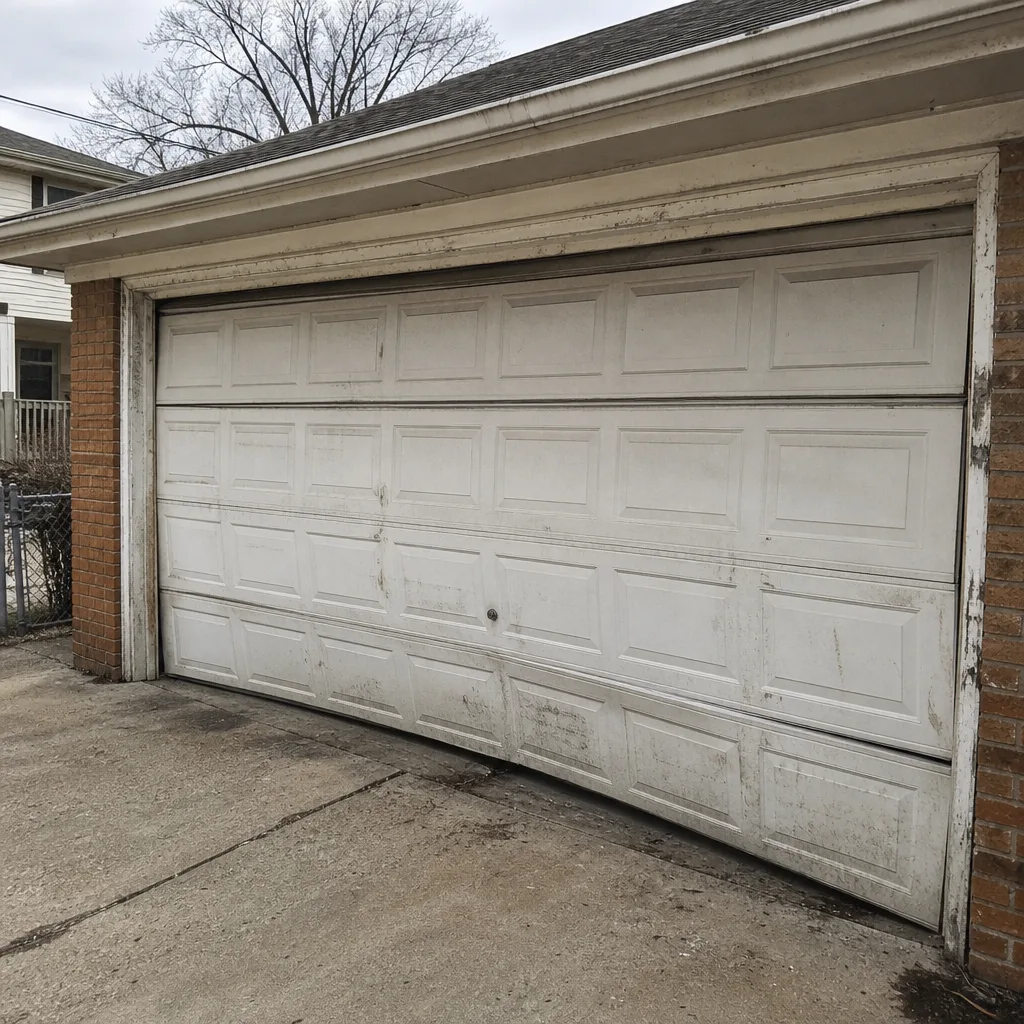 Before
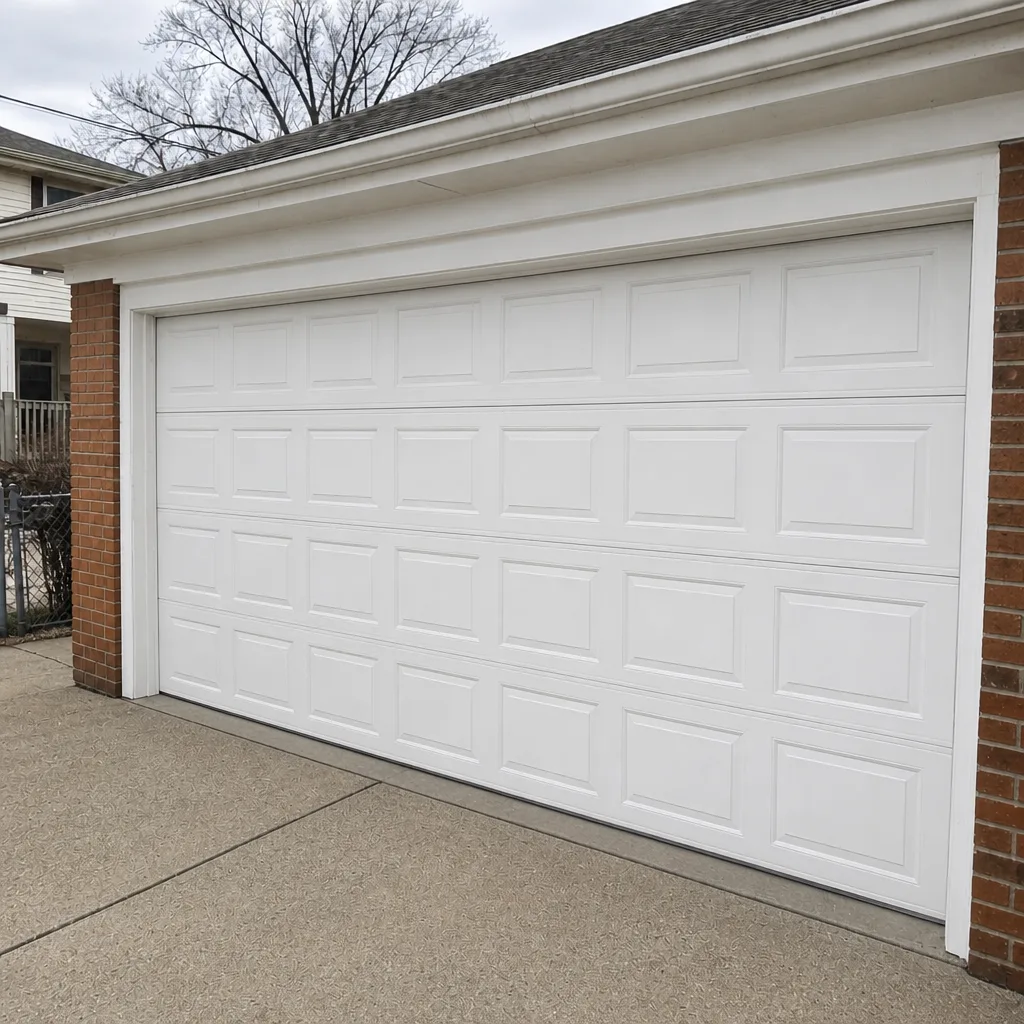 After
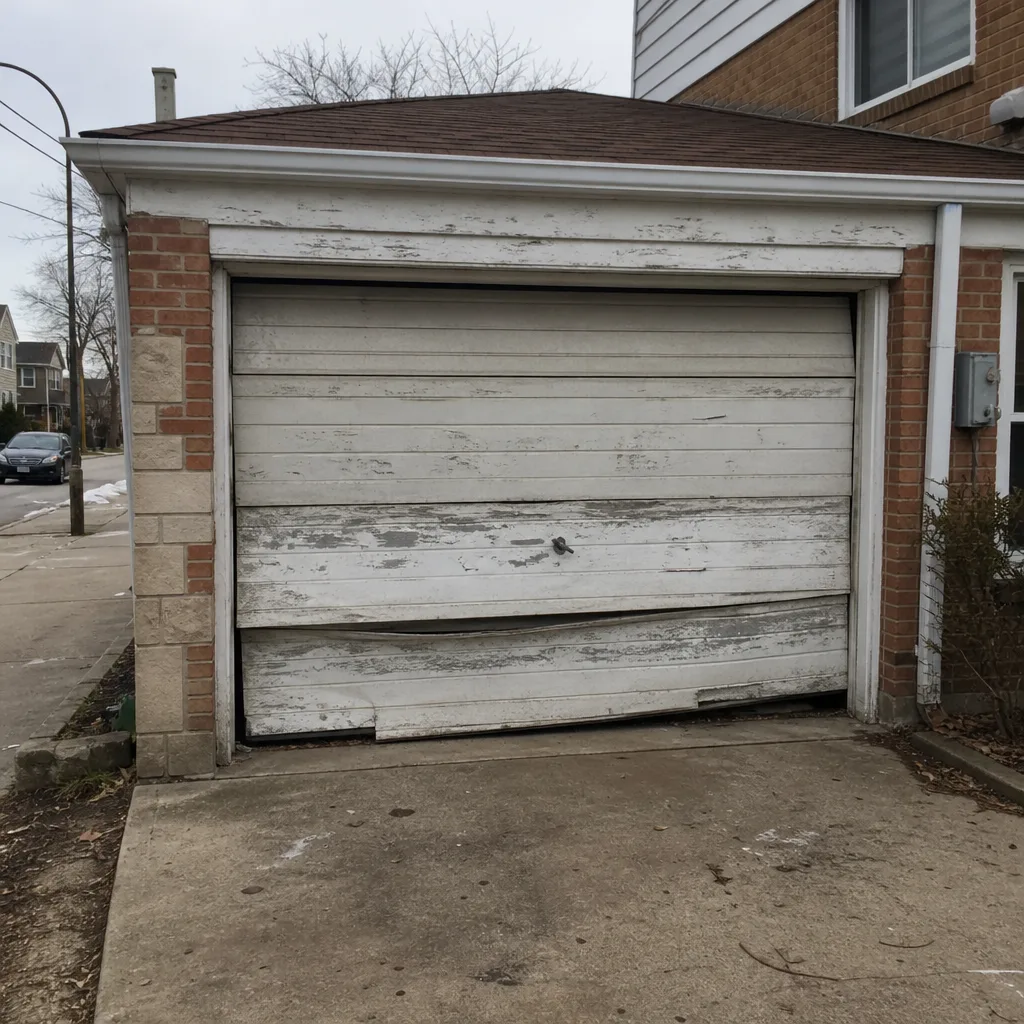 Before
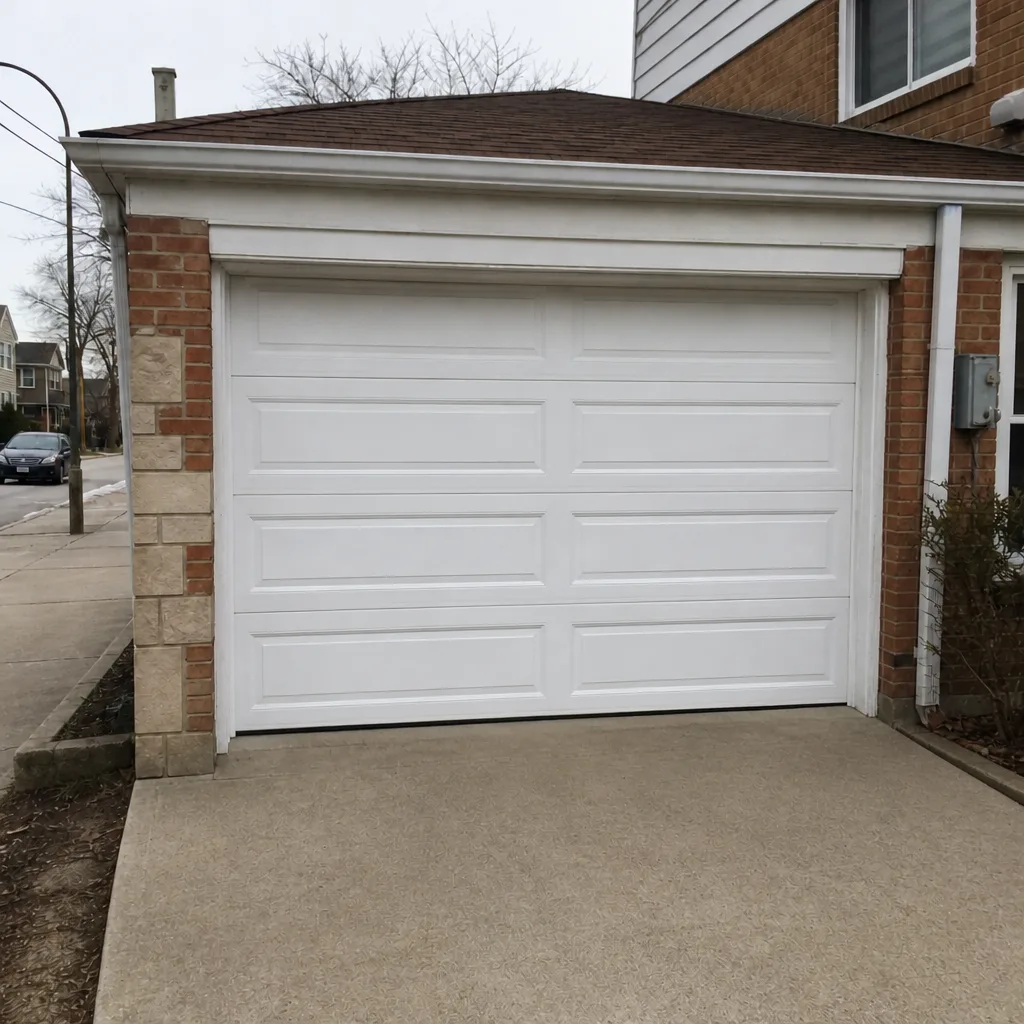 After
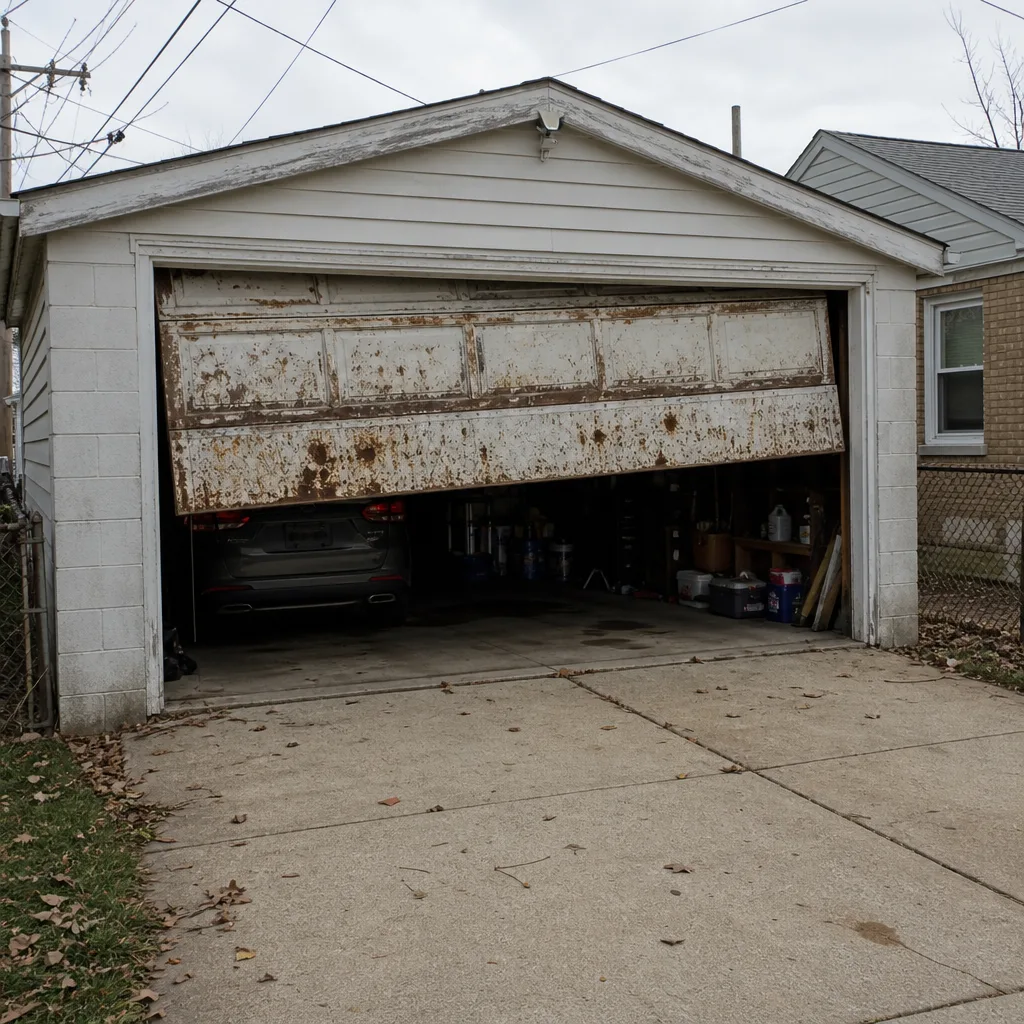 Before
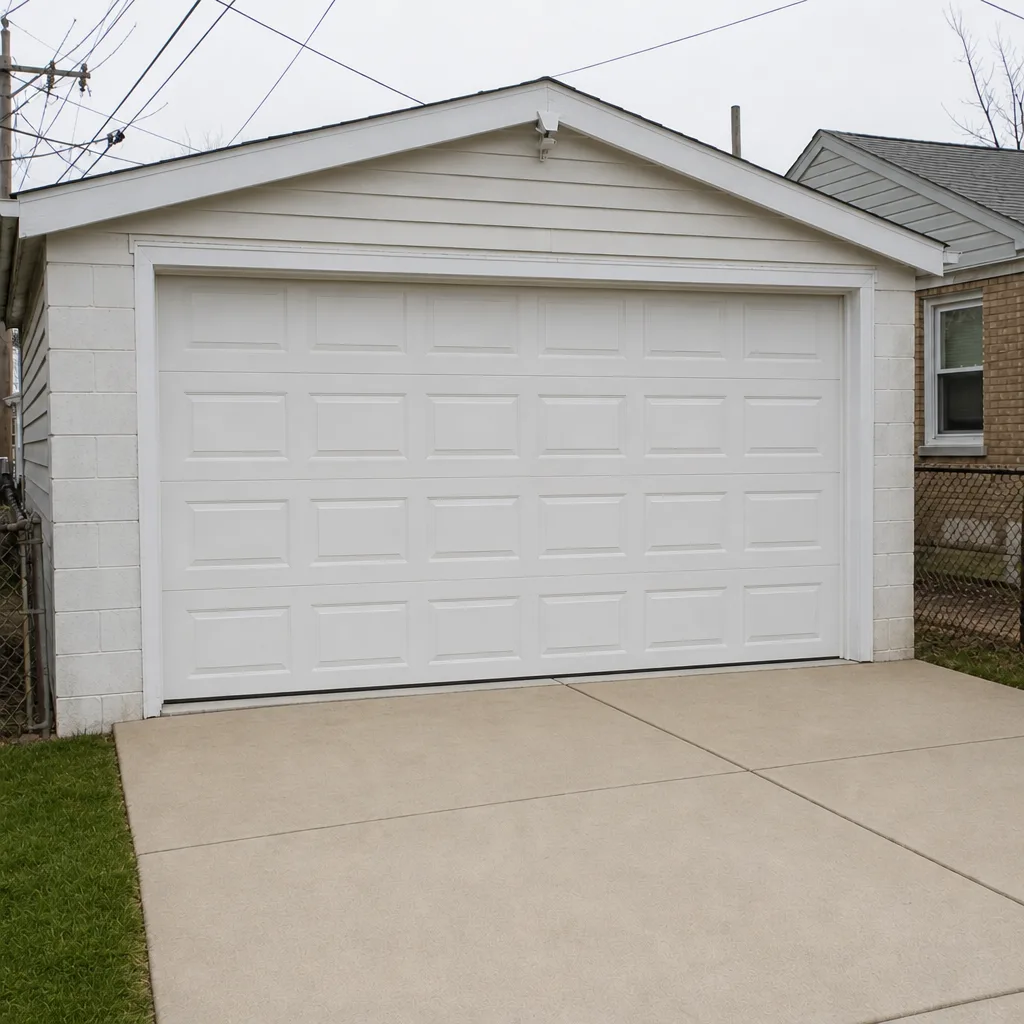 After
When to Call a Professional
Call a professional for anything involving torsion springs, cables, panel replacement, track replacement, or an opener housing that needs to come apart. Call when the door is out of balance – manual lift takes two hands or the door drifts – because the driver is usually a spring or cable that needs professional attention. Call when a West Ridge garage has non-standard headroom or track sizing and the replacement part isn’t matching. Call when winter cold has turned a stuck door into an opener failure, and call when brand matching matters and you want a genuine part the first time. Garage Door Repair West Ridge offers free estimates in West Ridge – call (833) 736-5797. We answer 24/7, with fast dispatch from 7am to 7pm Sunday through Friday, closed Saturday. Our technicians have up to 15 years of experience, and every price is quoted and agreed before work starts.
Frequently Asked Questions
No. Torsion springs hold stored energy that can release with enough force to break a wrist or damage property, and cable tension adds a second hazard. Spring replacement requires winding bars, spring-rate matching to the door’s true weight, and training. It’s the one job where “can I” isn’t the right question. Call (833) 736-5797 for a free estimate – the spring work is worth a specialist.
Often yes, because a botched Tier 2 job becomes a two-part repair. A wrong roller bends a track, a raised force setting hides the real cause, and an off-brand gear kit wears out early. A written estimate before you touch anything tells you the professional cost and lets you compare it honestly. Call (833) 736-5797 – estimates are free.
Spring pricing depends on spring type, door weight, and whether one or a matched pair is being replaced. We don’t publish a single price because the door’s setup decides it. A written estimate tells you the exact number before work starts, and it doesn’t change when the technician sees the door. Call (833) 736-5797 for a free quote.
The independent local professional we connect you with is licensed and insured as their state requires. Our role is to match you with a specialist trained in spring repair, opener service, and brand-specific parts. Ask for documentation when the technician arrives if it matters for your records. Call (833) 736-5797 to get started.
Almost always the photo-eye sensor, not the motor. Sensors fall out of alignment, get dusty, or get bumped by a bicycle or broom. Clean both lenses, check that the brackets are pointed at each other, and try again. If the door still reverses after that, it’s a diagnostic call. Call (833) 736-5797 – we can usually identify the issue on the first visit.
Don’t force it with the opener. Cold contracts the track, thickens lubricant, and stiffens weather seals – any of which can bind the door mid-travel. Try the manual release and lift the door by hand to check the balance and any obvious jam. If it won’t lift freely, the issue is spring, cable, or track, and it needs professional attention. Call (833) 736-5797 for a same-day visit.
The Bottom Line
Sort garage door work by what can hurt you, not by what looks easy. Weatherstripping, sensor alignment, lubrication, and moderately careful adjustments are safe DIY in West Ridge. Springs, cables, panel replacement, and truck-and-tool opener work are not – the physics doesn’t care about confidence. Cost in West Ridge is worse for failed DIY attempts than for the original repair, because one bad adjustment often becomes two. The written quote is your protection against surprise pricing. When in doubt about which tier a job sits in, let a specialist look at it. Call (833) 736-5797 for a free estimate. We answer 24/7, with fast dispatch from 7am to 7pm Sunday through Friday, closed Saturday.
Written by the team at Garage Door Repair West Ridge.